
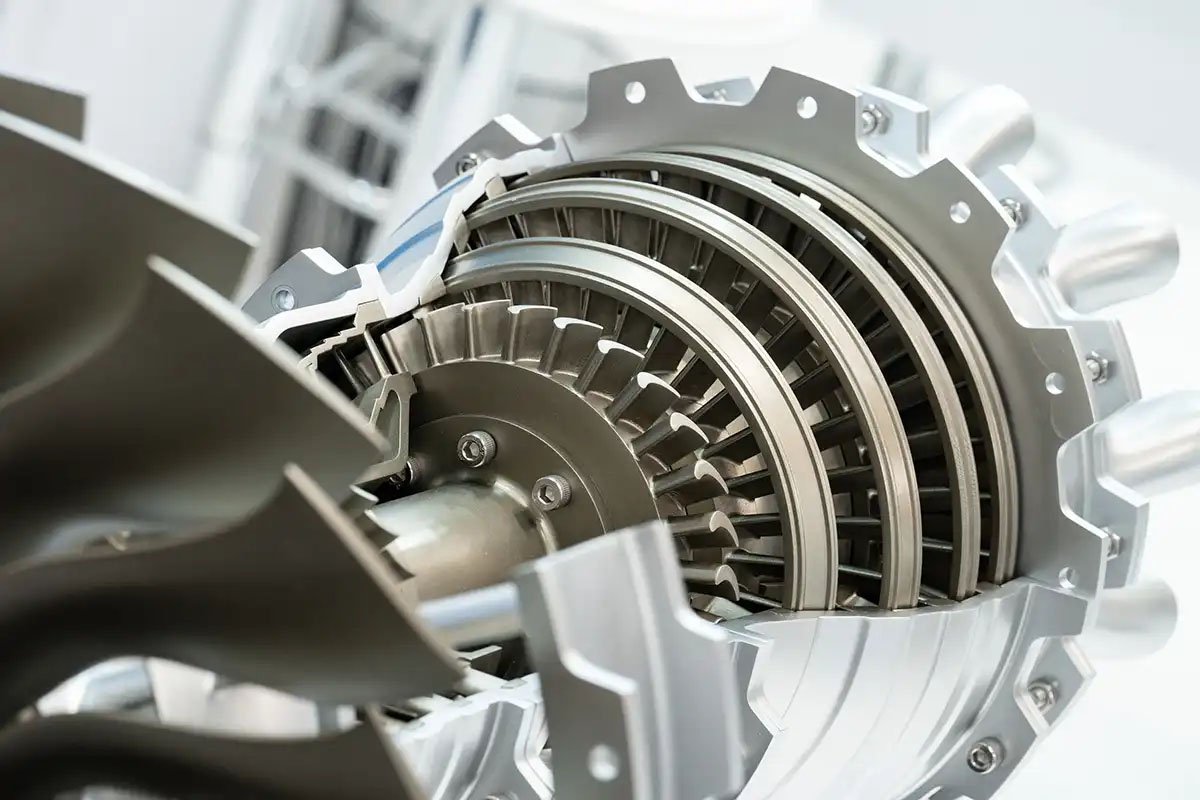
The smarter grinding wheel gives way

Opublikował 22/12/2025
The smarter grinding wheel gives way

How elastic bonded diamond tools optimize precision machining

When the hardest material in the world and soft plastic come together, the result is tools with very special grinding properties. We are talking about elastic bonded diamond grinding wheels. These show their strengths during finishing and ensure the perfect finish. Innovative processes such as these are necessary because the manufacturing industry faces the challenge of producing increasingly complex and precise components from resistant materials. Conventional production methods often reach their limits here, especially when the surfaces are so fine that they require particularly sensitive processing. At the GrindingHub trade fair, organized by the VDW (German Machine Tool Builders' Association) in Stuttgart from May 5 to 8, 2026, visitors will learn more about innovative grinding techniques for achieving the highest surface qualities.


For demanding finishing and polishing processes
Elastic grinding and polishing tools are used in a wide variety of industries. In metalworking, they refine surfaces ranging from the finest surgical instruments to heavy-duty turbine blades. These tools can be used to accelerate manufacturing processes and increase cost-effectiveness and sustainability in production. "Our elastic bonded diamond tools demonstrate their strengths wherever extremely hard materials such as carbide need to be machined with precision," says Jens Meiberg, Head of Technology Development at GrindingHub exhibitor Artifex Dr. Lohmann GmbH & Co. KG, a specialist in elastic grinding and polishing tools based in Kaltenkirchen near Hamburg. "They achieve their maximum effect particularly in applications where extremely fine surfaces, even mirror finishes, are required," says Meiberg. This makes them ideal for demanding finishing and polishing processes. According to Meiberg, Artifex is currently focusing on the machining of carbide drilling and milling tools to improve cutting edges and achieve more efficient chip removal from cutting tools.


Greater efficiency and reduced overall costs

Technically optimal surfaces are one thing, cost-effectiveness is another. In industrial practice, it ultimately comes down to the cost-benefit analysis for the user. In other words: When does the improved surface quality justify the higher cost? "Studies show service life improvements of more than 50 per cent compared to unprepared tools," says Artifex manager Meiberg. Combined with faster chip flow and greater chip volume, users achieve significant cost and service life advantages. Machining with elastic bonded diamond tools significantly improves the surface quality of the machined workpieces. In practice, this optimization leads to noticeably longer service life for subsequent tools and more stable and reliable process behavior. Users benefit from greater efficiency and reduced overall costs," says Meiberg.


Delicate machining for delicate surfaces
Some surfaces are so delicate that they must be machined with extreme care. As the Head of Technology Development at Artifex explains, flexibly mounted diamond particles achieve "non-contour-changing glossy surfaces" by cutting topological material peaks. The homogeneously distributed abrasive medium bounces back and forth in the bonding matrix. Put simply and in layman's terms: the soft mass gives way slightly, so that the grains wobble slightly when rubbed instead of scratching firmly. Therefore, the surface is only gently smoothed and polished, rather than aggressively removing material or changing the shape. In other words: the smarter grinding wheel gives way. "The pressure and speed parameters of the process pose the greatest challenge in preventing grain break-outs from this newly developed soft bond," says Meiberg. The surface quality can be achieved reproducibly throughout the entire life cycle of the disks. Thanks to the tool change options in the machine, machining is carried out in a single clamping and not through downstream processes. According to Meiberg, Artifex's in-house Research and Development Department ensures the continuous advancement of diamond tools – particularly with regard to new carbide alloys and modern carbide tools.

Scope for basic research down to the nanometer range
There is still plenty of scope for basic research at universities in the micro- and nanometer range. This also applies when using flexible precision machining tools in the finishing of structured surfaces. Dr. Monika Kipp, who heads the Grinding Technology Department at the Institute of Machining Technology at the Technical University Dortmund, is intensively involved in this topic. "One example of the use of flexible precision machining tools is the finishing of structured surfaces," says Kipp. If these are produced by milling, for example, micro-burrs may occur. In order to remove these without significantly altering the structure and at the same time improving the surface finish, the tools must be highly adaptable and only a very small amount of material should be removed. "To achieve this goal, our research focuses on the fundamental process behavior of flexible diamond tools," says the scientist, who was recently awarded the Otto Kienzle Commemorative Medal by the WGP (Scientific Society for Production Engineering).


Perfect choreography
When machining highly sensitive surfaces with flexible tools, it is essential to know exactly how the tools and material interact. "In order to avoid unwanted contour changes in precision machining with elastic bonded diamond grinding wheels or other flexible grinding tools, it is essential to understand the basic process interactions," says Kipp, summarizing the key challenge. This includes, for example, coordinating the process parameters and the bonding strength or flexibility of the tools and thus the local contact situation. In addition, according to the scientist, targeted adjustments to the process control with regard to the kinematics of the procedure could also be effective. In layman's terms, you can imagine it as choreography. How fast does the grinding tool move? How fast is the workpiece moving? At what angle or pattern do the grains strike the surface? How often does a single grain engage with the material? For optimal results, perfect coordination is essential.


Three factors: contact pressure, contact time, grain size
The surface quality in precision machining depends, among other things, on the local contact situation, says Kipp. "When it comes to process design, a distinction must be made in terms of the objective: whether the aim is to achieve the lowest possible roughness or whether functional surfaces with structural or contour elements need to be reworked," explains the researcher. Flexible abrasive tools can be used for corresponding applications. Material removal and thus the surface finish can be controlled by adjusting the contact pressure, contact time, and grain size, among other factors.

The grinding gap is a mystery

Applications at the limits of what is technically possible and economically viable therefore open up a wide field for industrial and academic research. Because the saying among experts still holds true: "The grinding gap is a mystery." This phrase suggests that practitioners and researchers still need to shed light on the deepest physical and process engineering secrets of grinding in order to technically optimize industrial production processes and make them more efficient and sustainable.
Aby uzyskać więcej informacji: Grinding Hub

Inne artykuły, które mogą Cię zainteresować

Ucimu: orders index for the second quarter of 2026 still down (-25.8%); foreign orders (-15.3%); dom

Riccardo Rosa, president of UCIMU: "We'll have to wait until the next few months to see the full effects of the hyper-depreciation, but we're very confident this measure will last until September 2028." In the second quarter of 2026, the machine tool orders index compiled by the UCIMU-SISTEMI PER PRODURRE Study & Business Culture Centre recorded a decline of -25.8% compared to the April-June 2025 period . In absolute value, the index stood at 47.8 (base 100 in 2021). The result expresses the difficulties that Italian machine tool manufacturers have encountered both on the domestic and foreign markets. In particular, orders collected from abroad decreased by -15.3% compared to the second quarter of 2025, for an absolute value of 63.2. Order intake in Italy also declined , falling 38.7% compared to the same period of the previous year. The absolute value of the index stood at 33.1. Riccardo Rosa, president of UCIMU-SISTEMI PER PRODURRE, stated: “The uncertainty of the geopolitical context—shaken by wars, the Hormuz crisis, and the decidedly worrying attitude of the President of the United States toward international politics—has profoundly undermined the already precarious balance in which the industry found itself operating.” "The decline in international deliveries, given the current situation, is understandable, and we expected it. Business has slowed, but, as is our custom, we've tried to focus our offerings on those areas less directly affected by conflicts and critical issues, diversifying our product offerings wherever possible." "It is certain ," continued President Riccardo Rosa , " that the investment figures and values ​​once ensured by the automotive industry cannot be replaced by the demand expressed by other sectors, however dynamic, such as defense, aerospace, and energy. For this reason, once again, we ask our representatives in Europe to reconsider their decision and adopt the principle of technological neutrality when defining automotive development plans. This approach would allow the industry, and its entire supply chain, to properly manage the ongoing transition, not only respecting the environment but also safeguarding, where possible, employment." Domestically, businesses awaited clarifications on the hyper-depreciation program to confirm their purchasing intentions. Since June 12th, the day all the operational steps were completed, the hyper-depreciation program has been bearing fruit. We immediately noticed a change in attitude among Italian users: orders are starting to arrive. "We'll have to wait a few more months, however, for the effect to be fully reflected in our data, but we're definitely confident. This is also because, in the meantime, we have data from the Ministry of Business and Made in Italy, which, as of July 9th, reported the submission of 7,000 communications on the GSE platform, worth €2.5 billion." MIMIT deserves great credit for having established a multi-year term for this incentive. Its effectiveness until September 2028 should ensure thoughtful planning of investments in new machine tools and production technologies by Italian customers, also allowing us manufacturers to plan our production activities over the medium term. "The hope ," concluded Riccardo Rosa , " is to soon see the Italian market return to the levels it experienced in 2021-2022, when it was worth over €6 billion. This is also because our manufacturing industry needs to innovate to remain competitive in an international context where digital and AI are completely reshaping the rules of the game."

Amb 2026: collaborative processes drive automation

Central topic: Automation: Patrick Schwarzkopf (VDMA) discusses collaborative processes, artificial intelligence, and automation for SMEs using no-code solutions. As manufacturing companies strive to make their processes more efficient and flexible, automation solutions play a key role, especially in areas where people and machines are increasingly collaborating. AMB 2026 addresses this key topic with a practical approach and demonstrates how collaborative processes are evolving across the entire metal cutting process chain. In this interview, Patrick Schwarzkopf, Director General of the VDMA Robotics and Automation Association, analyzes the key factors driving this evolution and provides an overview of the developments companies should keep an eye on. Automation as one of the three central themes: Collaborative processes are gaining increasing importance AMB : The robotics and automation industry is forecasting a 5% decline in revenue by 2026; nevertheless, pressure on manufacturing companies to automate their processes continues to grow. Why is now the right time to focus on collaborative processes, and what factors are driving companies to take this step? Patrick Schwarzkopf : It's true, we're still observing a marked caution in investments, due to several reasons: from geopolitical tensions to the well-known challenges related to the competitiveness of production sites. However, the trend toward automation remains unchanged. Demographic change will become even more evident in the coming years; this will make it necessary to automate an increasing number of activities to support the remaining qualified personnel. Only in this way can we remain competitive. The interaction between humans and machines will be crucial. The extremely rapid development of artificial intelligence (AI), particularly generative AI and so-called physical AI, opens up new possibilities, for example through agent AI (Agentic AI) and through the much simpler use and programming of automation solutions. AMB : For a long time, automation was primarily designed for large-scale production. Today, however, robotic solutions are a viable option even for small series. How far has this evolution come, and what does a small business actually need to introduce automation into its production process? Patrick Schwarzkopf : Automation for SMEs is making enormous strides. Technological developments in recent years have been extraordinary and have significantly reduced the barriers to entry for small and medium-sized enterprises. Typical scenarios are "low volume, high mix," characterized by low production volumes and a high degree of product diversity. In these contexts, it is crucial that programming can be performed quickly, easily, and without significant staff effort. Numerous no-code solutions exist today for this purpose, requiring no programming knowledge. Automation workflows can be configured via graphical interfaces with drag-and-drop functionality, while robot trajectories can be taught through manual guidance (hand-guiding) and memorized at the push of a button. Major manufacturers have long been offering solutions specifically designed to meet the needs of SMEs. Pragmatic configurations, such as a robot working overnight, are often sufficient, thus enabling a significant increase in productivity. The obstacle is often less technological than cultural: many companies continue to believe that automation is inevitably too complex or too expensive. This belief is now obsolete, because solutions already exist and are easily observed at specialized trade shows like AMB. A useful reference point, for example, is Go4Robotics, the online platform of the International Federation of Robotics (IFR). AMB : As programming and operation become easier, direct collaboration between humans and robots is also becoming increasingly practical. Today, the two increasingly work side by side, without the need for protective barriers: it was precisely the development of AI-supported sensor systems that made this approach truly feasible. What concrete changes does all this mean for the shop floor, and how should companies rethink processes and the role of people? Patrick Schwarzkopf : Collaborative robots (cobots) are now well established. In many applications, however, the term "coexistence" is more accurately used: humans and robots operate without barriers, enabling direct and safe interaction. We are now seeing a further level of even closer collaboration with humanoid robotics. AI is making extraordinary progress in this area: robots are increasingly capable of interpreting their surroundings and acting autonomously and appropriately. Although significant pioneering work is still needed, humanoid robots are gradually emerging from research laboratories and are already finding their first experimental applications in industrial settings. It will still be some time before this technology reaches full maturity for widespread use. At the same time, however, humanoid robotics is accelerating the evolution of close human-machine interaction, for example through the ability to communicate verbally with robots. AMB : Many of these developments are best appreciated by observing them live. In September, AMB will bring together the entire metalworking ecosystem in Stuttgart: manufacturers, users, and researchers under one roof. What contribution can this unique combination make to the wider adoption of collaborative automation? And why is a visit to the trade fair essential for all metalworking companies considering the introduction of automation solutions? Patrick Schwarzkopf : A look at the data clearly highlights its significance: according to the International Federation of Robotics (IFR), machine tending—the automatic loading and unloading of workpieces on machine tools—is one of the main applications of robotics. Over the past decade, new annual installations of robots for handling tasks on machine tools have increased from 14,500 in 2015 to 19,000 in 2024. Preliminary data from the IFR indicate that the trend will continue with significant, double-digit growth in 2025. The use of collaborative robots (cobots) has also increased significantly in recent years: in 2024, approximately 65,000 cobots were installed worldwide, representing 12% of all industrial robots. The most significant increases are being seen in mobile robotics, which enables the flexibly connecting different production machines, for example through mobile manipulators, i.e., mobile platforms equipped with a robotic arm. It's hard to find such a comprehensive, focused, and industry-specific overview as that offered by a specialized trade fair. At AMB, you can see and experience firsthand the automation solutions for metalworking by chip removal. AMB : Thank you for the interview, Mr. Schwarzkopf. Focus on automation at AMB 2026 in the Oskar-Lapp-Halle (Hall 6) Automation will be a key focus at AMB 2026 in nearly every exhibition hall: from machine tool manufacturers with automation systems to solutions for tools and clamping technology, such as automatic setup. A special highlight will be the Oskar-Lapp-Halle (Hall 6), which will house the "Automation and Handling Technologies" area. Numerous exhibiting companies—including FANUC, KUKA, Cellro, RoboJob, Wassermann Technologie, and many others—will present their latest solutions for production and process management. It's worth checking out the exhibitor list, as here, trade visitors can experience firsthand how robotics, collaborative automation, Industry 4.0 approaches, and the IIoT (Industrial Internet of Things) are evolving metal-cutting processes, introducing new solutions and driving innovation in the industry. About AMB Since 1982, AMB has presented the highlights of the international metalworking industry. "Where Metal Comes Alive" will once again be a fixture on the industry's agenda in 2026, this year from September 15 to 19. It is the international marketplace and meeting place for metalworking, showcasing the latest products, technologies, innovations, services, and concepts in all their facets. AMB is supported by the VDMA Präzisionswerkzeuge (Precision Tools), VDMA Software and Digitalization (Software and Digitalization), and the VDW Verein Deutscher Werkzeugmaschinenfabriken e.V. (German Machine Tool Builders' Association).

Zapisz się do naszego newslettera
Być na bieżąco z najnowszymi wiadomościami o świecie przemysłowym
Biuletyn obrazkowy Lindustriale
Dati Legali

L'industriale s.r.l.
P. IVA: 12212870153
Codice Fiscale: 12212870153

Sede Legale

Via Carlo Dolci, 32
20148 Milano (MI)
Italy

Registro Imprese

Iscrizione R.I.: 12212870153
REA: MI-1539011
Capitale sociale: Euro 10.400,00 i.v.

Top
This website is protected by reCAPTCHA, therefore the Google privacy policy and terms of service apply.