AMB 2026: Collaborative Processes Drive Automation

Opublikował 09/07/2026
AMB 2026: Collaborative Processes Drive Automation

Central topic: Automation: Patrick Schwarzkopf (VDMA) discusses collaborative processes, artificial intelligence, and automation for SMEs using no-code solutions.

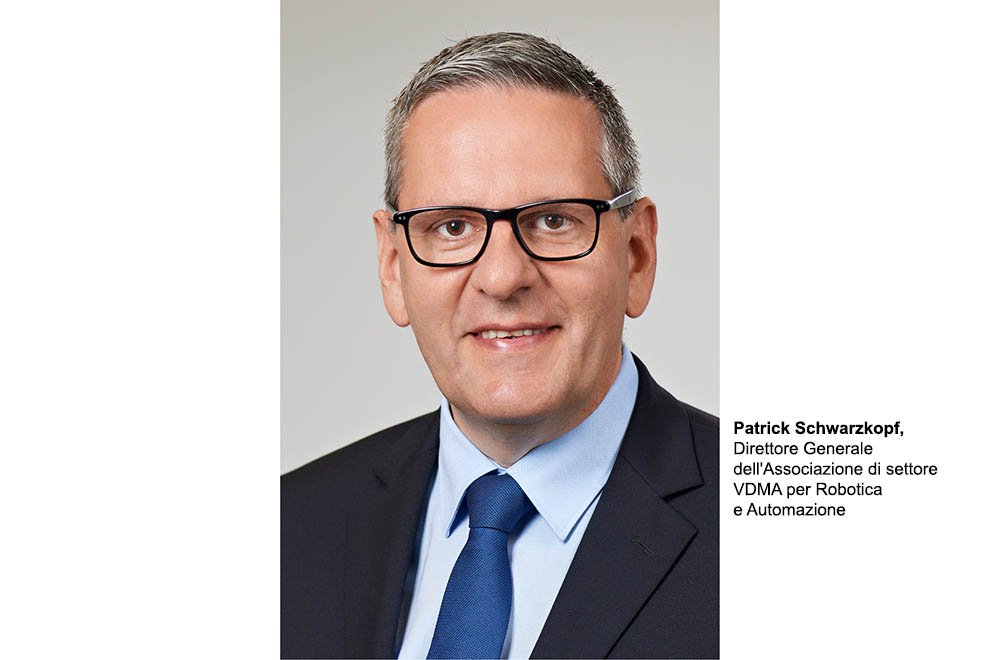
As manufacturing companies strive to make their processes more efficient and flexible, automation solutions play a key role, especially in areas where people and machines are increasingly collaborating. AMB 2026 addresses this key topic with a practical approach and demonstrates how collaborative processes are evolving across the entire metal cutting process chain. In this interview, Patrick Schwarzkopf, Director General of the VDMA Robotics and Automation Association, analyzes the key factors driving this evolution and provides an overview of the developments companies should keep an eye on.

Automation as one of the three central themes: Collaborative processes are gaining increasing importance

AMB : The robotics and automation industry is forecasting a 5% decline in revenue by 2026; nevertheless, pressure on manufacturing companies to automate their processes continues to grow. Why is now the right time to focus on collaborative processes, and what factors are driving companies to take this step?

Patrick Schwarzkopf : It's true, we're still observing a marked caution in investments, due to several reasons: from geopolitical tensions to the well-known challenges related to the competitiveness of production sites. However, the trend toward automation remains unchanged. Demographic change will become even more evident in the coming years; this will make it necessary to automate an increasing number of activities to support the remaining qualified personnel. Only in this way can we remain competitive. The interaction between humans and machines will be crucial. The extremely rapid development of artificial intelligence (AI), particularly generative AI and so-called physical AI, opens up new possibilities, for example through agent AI (Agentic AI) and through the much simpler use and programming of automation solutions.

AMB : For a long time, automation was primarily designed for large-scale production. Today, however, robotic solutions are a viable option even for small series. How far has this evolution come, and what does a small business actually need to introduce automation into its production process?

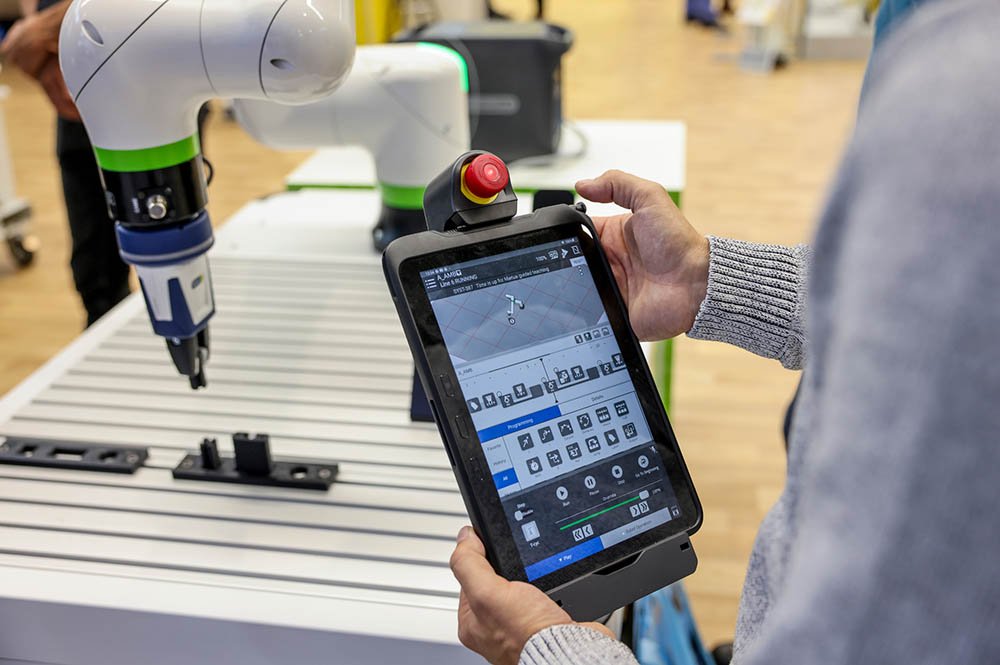
Patrick Schwarzkopf : Automation for SMEs is making enormous strides. Technological developments in recent years have been extraordinary and have significantly reduced the barriers to entry for small and medium-sized enterprises. Typical scenarios are "low volume, high mix," characterized by low production volumes and a high degree of product diversity. In these contexts, it is crucial that programming can be performed quickly, easily, and without significant staff effort. Numerous no-code solutions exist today for this purpose, requiring no programming knowledge. Automation workflows can be configured via graphical interfaces with drag-and-drop functionality, while robot trajectories can be taught through manual guidance (hand-guiding) and memorized at the push of a button. Major manufacturers have long been offering solutions specifically designed to meet the needs of SMEs. Pragmatic configurations, such as a robot working overnight, are often sufficient, thus enabling a significant increase in productivity. The obstacle is often less technological than cultural: many companies continue to believe that automation is inevitably too complex or too expensive. This belief is now obsolete, because solutions already exist and are easily observed at specialized trade shows like AMB. A useful reference point, for example, is Go4Robotics, the online platform of the International Federation of Robotics (IFR).

AMB : As programming and operation become easier, direct collaboration between humans and robots is also becoming increasingly practical. Today, the two increasingly work side by side, without the need for protective barriers: it was precisely the development of AI-supported sensor systems that made this approach truly feasible. What concrete changes does all this mean for the shop floor, and how should companies rethink processes and the role of people?

Patrick Schwarzkopf : Collaborative robots (cobots) are now well established. In many applications, however, the term "coexistence" is more accurately used: humans and robots operate without barriers, enabling direct and safe interaction. We are now seeing a further level of even closer collaboration with humanoid robotics. AI is making extraordinary progress in this area: robots are increasingly capable of interpreting their surroundings and acting autonomously and appropriately. Although significant pioneering work is still needed, humanoid robots are gradually emerging from research laboratories and are already finding their first experimental applications in industrial settings. It will still be some time before this technology reaches full maturity for widespread use. At the same time, however, humanoid robotics is accelerating the evolution of close human-machine interaction, for example through the ability to communicate verbally with robots.

AMB : Many of these developments are best appreciated by observing them live. In September, AMB will bring together the entire metalworking ecosystem in Stuttgart: manufacturers, users, and researchers under one roof. What contribution can this unique combination make to the wider adoption of collaborative automation? And why is a visit to the trade fair essential for all metalworking companies considering the introduction of automation solutions?

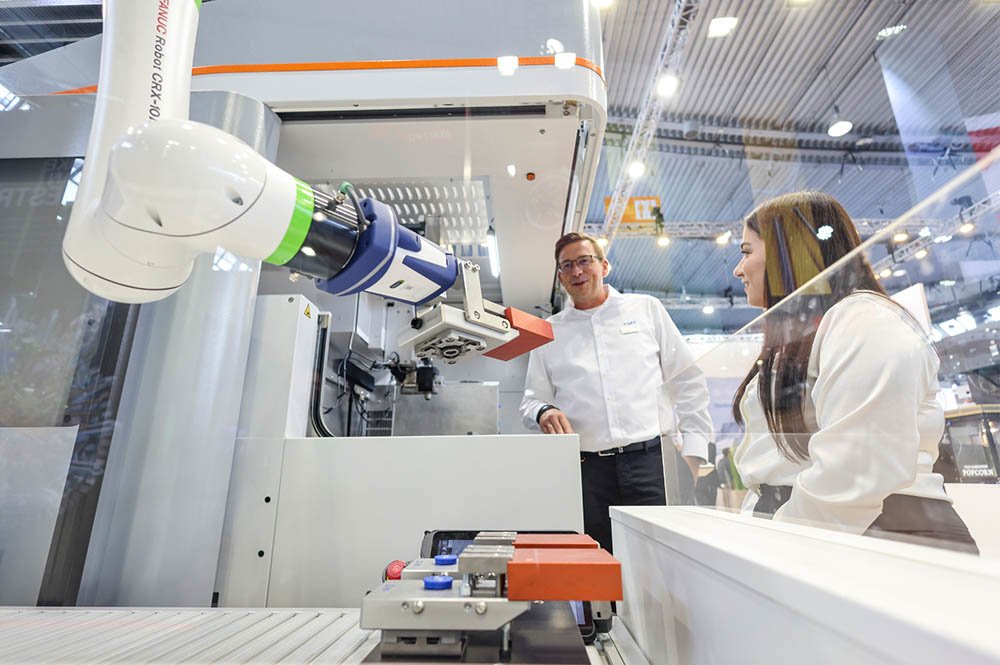
Patrick Schwarzkopf : A look at the data clearly highlights its significance: according to the International Federation of Robotics (IFR), machine tending—the automatic loading and unloading of workpieces on machine tools—is one of the main applications of robotics. Over the past decade, new annual installations of robots for handling tasks on machine tools have increased from 14,500 in 2015 to 19,000 in 2024. Preliminary data from the IFR indicate that the trend will continue with significant, double-digit growth in 2025. The use of collaborative robots (cobots) has also increased significantly in recent years: in 2024, approximately 65,000 cobots were installed worldwide, representing 12% of all industrial robots. The most significant increases are being seen in mobile robotics, which enables the flexibly connecting different production machines, for example through mobile manipulators, i.e., mobile platforms equipped with a robotic arm. It's hard to find such a comprehensive, focused, and industry-specific overview as that offered by a specialized trade fair. At AMB, you can see and experience firsthand the automation solutions for metalworking by chip removal.

AMB : Thank you for the interview, Mr. Schwarzkopf.

Focus on automation at AMB 2026 in the Oskar-Lapp-Halle (Hall 6)
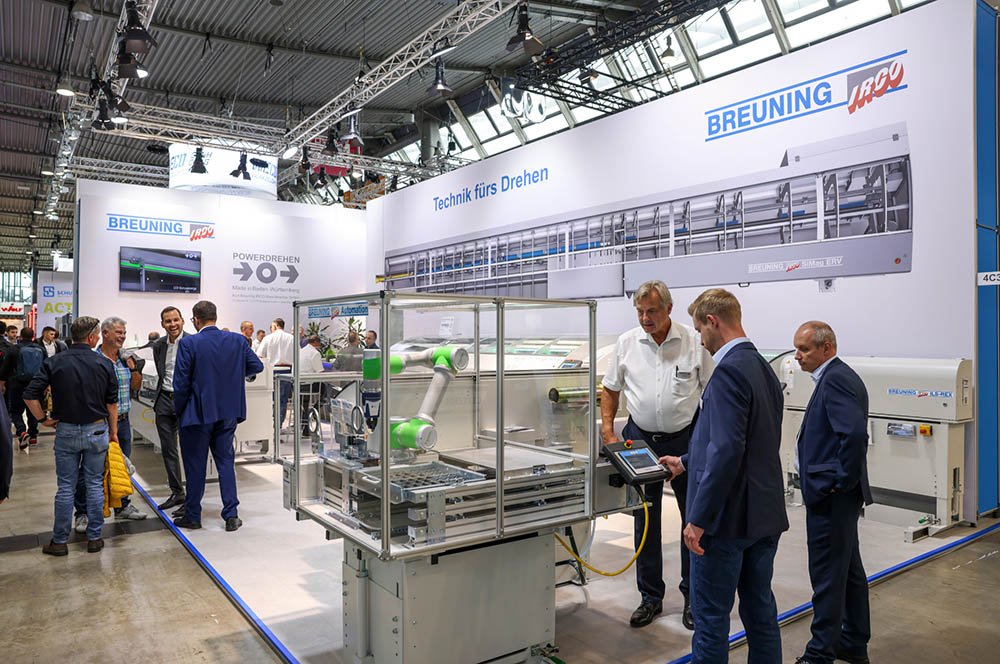
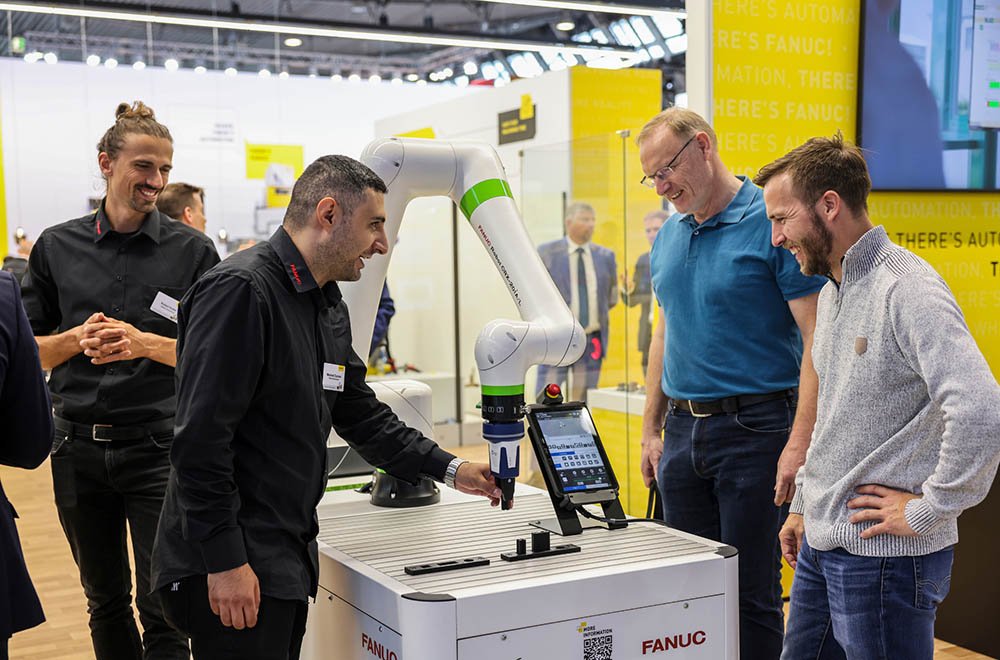
Automation will be a key focus at AMB 2026 in nearly every exhibition hall: from machine tool manufacturers with automation systems to solutions for tools and clamping technology, such as automatic setup. A special highlight will be the Oskar-Lapp-Halle (Hall 6), which will house the "Automation and Handling Technologies" area. Numerous exhibiting companies—including FANUC, KUKA, Cellro, RoboJob, Wassermann Technologie, and many others—will present their latest solutions for production and process management. It's worth checking out the exhibitor list, as here, trade visitors can experience firsthand how robotics, collaborative automation, Industry 4.0 approaches, and the IIoT (Industrial Internet of Things) are evolving metal-cutting processes, introducing new solutions and driving innovation in the industry.

About AMB
Since 1982, AMB has presented the highlights of the international metalworking industry. "Where Metal Comes Alive" will once again be a fixture on the industry's agenda in 2026, this year from September 15 to 19. It is the international marketplace and meeting place for metalworking, showcasing the latest products, technologies, innovations, services, and concepts in all their facets. AMB is supported by the VDMA Präzisionswerkzeuge (Precision Tools), VDMA Software and Digitalization (Software and Digitalization), and the VDW Verein Deutscher Werkzeugmaschinenfabriken e.V. (German Machine Tool Builders' Association).
Aby uzyskać więcej informacji: AMB 2026
AMB 2026: Collaborative Processes Drive Automation

Inne artykuły, które mogą Cię zainteresować

Mechanical exports exceed 20 billion euros in the first half of the year

The figures presented at Anima Export Days 2026: +2.8% compared to the same period last year. Exports are growing in the USA, China, and Germany. Exports of the mechanical engineering sector represented by Anima Confindustria reached €20.4 billion in the first half of 2026, up 2.8% compared to the same period in 2025. The data, processed by Anima's Statistics Office based on Istat data, were presented during the Brescia leg of Anima Export Days , the initiative dedicated to the internationalization of the Italian mechanical engineering sector. Running from September 28th to October 1st, the event is bringing together companies in the sector with selected international buyers. Now in its sixth edition, the Export Days are a collaboration between Anima Confindustria, the Ministry of Foreign Affairs and International Cooperation (MAECI), and the Italian Trade Agency (ITA), with the aim of fostering new trade relations and supporting the strengthening of Italian companies' presence in foreign markets . This year, the B2B meetings involve operators from over 20 countries and are taking place in four locations : Borgosesia, Turin, Brescia, and Bassano del Grappa. The initiative comes at a time when geopolitical tensions and uncertainties over trade policies continue to impact international trade. Against this backdrop, data for the first half of 2026 paint a resilient picture for the mechanical engineering sector, represented by Anima. Exports from Anima's sectors totaled €20.4 billion , up 2.8% from €19.8 billion in the same period in 2025. The trend confirms the sector's strong international vocation , albeit with varying trends. The main export components include valves and faucets , gas turbines, hydraulic pumps, and air conditioning systems. Other sectors are showing positive results, while others are experiencing a decline. Geographically, the United States remains the leading destination market for exports in the animal and animal sectors, with €2.38 billion in the first six months of 2026, up 2.4% compared to the same period of the previous year. Germany follows, with €1.99 billion (+4.8%), and France, with €1.81 billion (+2.9%). Alongside the more established European markets, some particularly significant trends are emerging in non-EU areas, starting with China, the Middle East, and North Africa. Despite a general decline towards the Gulf countries (-3.7%), exports to Saudi Arabia grew by 14.6% (665.1 million euros) , supported by the sectors related to process plants, energy, infrastructure and cooling. In China , exports of the Anima sectors grew by 22.3% and reached almost 720 million euros . The aeraulic systems sector was the main driver of this increase. Steam turbines and air compressors also recorded good growth in China. Algeria's growth was even more significant, rising 146.7% from €173.3 million to €427.6 million. This result was primarily driven by technologies such as gas turbines (which account for approximately 47% of total exports to the country), valves and taps, as well as pressure products and equipment. These flows are often tied to individual orders and therefore not necessarily characterized by continuous trends, but the data highlights the ability of Italian companies to seize opportunities even in rapidly developing markets. "The 2.8% growth in exports in the first half of the year confirms the ability of Italian mechanical engineering to maintain a competitive position on international markets, even in a period characterized by geopolitical tensions and trade uncertainty. The United States remains the primary destination market, while the results in China and Algeria demonstrate the ability of companies to seize opportunities in different markets. This is a sign of resilience that must be accompanied by greater diversification and a strengthened international presence. In this regard, the Export Days represent a concrete tool for creating new relationships and business opportunities," stated Pietro Almici, president of Anima Confindustria . On the import front, in the first six months of the year, the Anima sectors recorded a 1.2% increase, for a total value of 9.73 billion euros; this figure completes the current trade picture and confirms the centrality now assumed by international markets beyond the European one. It is in this context that Anima is renewing its Export Days , transforming market analysis into a concrete opportunity for supply and demand to meet.

Steel exports: the top ten hubs are worth €6.9 billion.

In the first half of 2026, exports from the main steel districts grew by 1.9%. Imports decreased by 9.2%. The Italian steel industry is holding up on foreign markets, but at very different rates across regions. In the first half of 2026, exports in value of steel products, pipes and other products from the first transformation of steel from the top ten Italian steel hubs reached almost 6.9 billion euros , compared to 6.7 billion in the same period of 2025, marking a growth of 1.9% . The data for the top ten hubs is more dynamic than the overall export trend: overall, they fell by 0.1% in value in the half-year, compared to a 0.2% increase in volume . This slight decrease, explains the siderweb Research Office, is due to lower sales prices. The rankings confirm Brescia at the top. Udine maintains second place, and Cremona third. However, the rankings show significant changes: Milan gains two spots, Reggio Emilia gains one, while Bergamo loses two and Lecco loses one . Brescia strengthens its leadership. Milan climbs. The Brescia hub remains Italy's leading steel hub in terms of export value, recording growth of 7.1% . This increase allows Brescia to widen its lead over Udine: the gap between the top two hubs increases from 74.7 to 96.5 million euros . Udine maintains second place with a 5.3% increase in exports. However, Cremona recorded the strongest growth among the top ten hubs, consolidating its third place: +12.6%. Mantua , fourth in the ranking, saw a 5.8% drop in exports. Milan saw significant growth, rising two places with a 4.5% increase. Vicenza retained its sixth position, with export values ​​essentially unchanged compared to the first half of 2025. The most negative figure in the ranking is that of Bergamo , which recorded a 19.5% contraction in exports and dropped two positions. On the other hand, Reggio Emilia recorded one of the most significant increases, with an 11.1% increase, and rose one position. Terni grew by 7.8% and maintained its eighth place. Lecco rounded out the top 10, with exports down 3%. Taranto , home to the Acciaierie d'Italia steelmaking hub, is also outside the top 20 in the first half of 2026. Exports fell by 86.5%. In 2025, the value had fallen by 40.3% compared to the previous year, stopping at 42 million euros (362 million in 2022). Imports: €500 million less from the top ten hubs The picture is changing for foreign purchases. In the first half of 2026, imports from the top ten steel hubs decreased by 9.2%, from 5.8 to 5.3 billion euros : approximately 500 million euros less in a year. At the national level, the contraction is even more marked: imports of steel products, pipes, and other products from the first steel transformation decreased by 13% in value and 15.9% in quantity. The different dynamics between European and non-EU suppliers is particularly significant. Imports from non-EU countries decreased by 22.5%, equal to approximately 1.6 million tonnes, while those from EU countries decreased by 2.1%. In the context outlined by the analysis by the siderweb Research Office, the reduction in non-EU purchases is also linked to the full implementation of the Carbon Border Adjustment Mechanism (CBAM) .

Anima confindustria met with ministers from jordan in milan

Discussion with Zeina Touqan and Tareq Abu Ghazaleh to develop new opportunities for the Italian mechanical engineering industry Anima Confindustria promoted an institutional discussion in Milan with Jordan on business and investment prospects for the Italian mechanical engineering industry . The roundtable, organized in collaboration with the Joint Italian Arab Chamber of Commerce and Assolombarda , brought together Jordanian businesses and institutional representatives to identify concrete opportunities for Italian companies. The meeting was attended by HE Zeina Touqan, Minister of Planning and International Cooperation of Jordan; HE Tareq Abu Ghazaleh, Minister of Investment ; and Raffaele Cattaneo , Undersecretary to the Presidency for International and European Relations of the Lombardy Region . The two representatives of the Jordanian government met with several Italian companies during the morning. In the afternoon, the round table was chaired by Alberto Zerbinato, Vice President of Anima Confindustria with responsibility for internationalization. The discussion allowed for a deeper exploration of projects and collaboration opportunities in sectors of interest to the Italian mechanical engineering industry , including water and wastewater management, waste treatment, hydroelectric power, construction and tourism infrastructure, and technologies and machinery for the pharmaceutical sector. " We want to strengthen trade relations with Jordan and develop new cooperation opportunities for our companies. Our goal is to consolidate dialogue and create concrete opportunities for collaboration in the industrial sectors we serve best ," said Alberto Zerbinato , vice president of Anima Confindustria with responsibility for internationalization. For the Federation, the meeting represented an opening towards a market where excellent opportunities can emerge related to investment, infrastructure, sustainability, and innovation. Anima thus brings the Italian mechanical engineering sector into direct dialogue with Jordanian public bodies and businesses. The meeting was a stepping stone to the Jordan-EU Investment Conference , scheduled for November 19th at the Dead Sea , attended by European Commission President Ursula von der Leyen and attended by a delegation from Anima Confindustria. The conference will focus on investment and cooperation opportunities between Jordan and the European Union and will provide a further opportunity for economic operators to engage in dialogue.

Zapisz się do naszego newslettera
Być na bieżąco z najnowszymi wiadomościami o świecie przemysłowym
Biuletyn obrazkowy Lindustriale
Dati Legali

L'industriale s.r.l.
P. IVA: 12212870153
Codice Fiscale: 12212870153

Sede Legale

Via Carlo Dolci, 32
20148 Milano (MI)
Italy

Registro Imprese

Iscrizione R.I.: 12212870153
REA: MI-1539011
Capitale sociale: Euro 10.400,00 i.v.

Top
This website is protected by reCAPTCHA, therefore the Google privacy policy and terms of service apply.