Vice President Marco Golinelli: "Implementing decrees, investments, and business qualifications will be crucial to transforming nuclear power into an opportunity for our manufacturing industry."
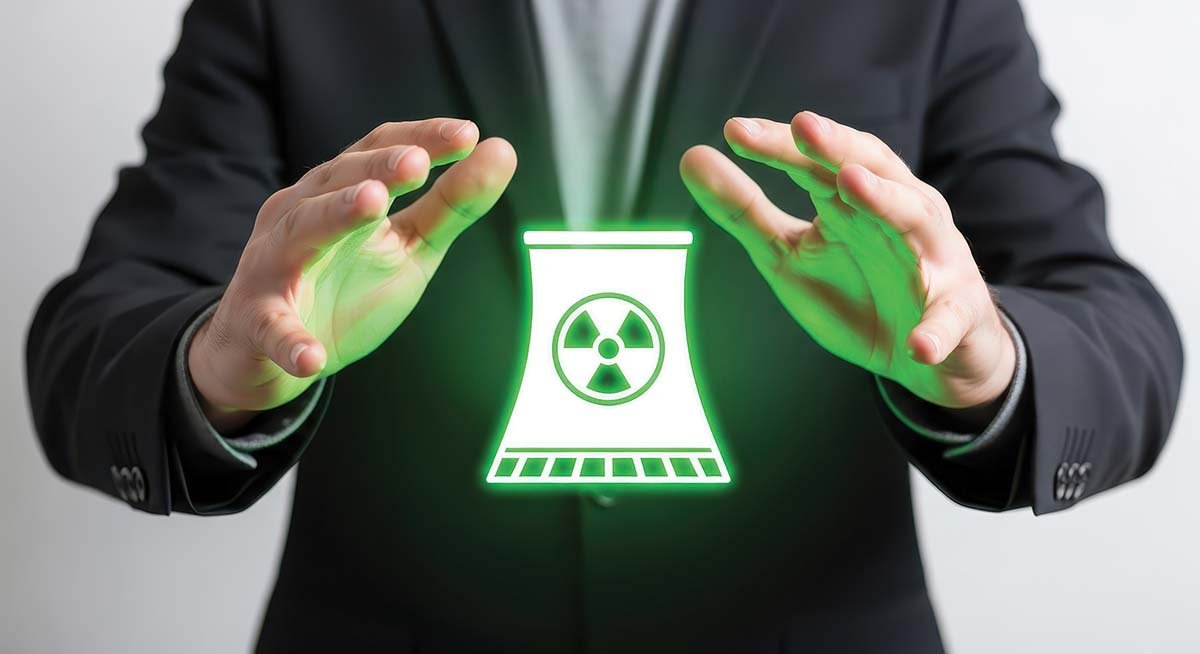
The Senate's final approval of the enabling bill on sustainable nuclear energy marks a new phase for Italian industry. According to Anima Confindustria , a federation of 35 associations representing mechanical engineering companies, the priority now is to translate the new regulatory framework into an industrial policy capable of leveraging the country's existing technological and manufacturing expertise and strengthening Italian companies' participation in European and international nuclear programs.
Anima Confindustria has followed the measure from the early stages of the parliamentary process, speaking at a hearing in the Chamber to emphasize that nuclear power represents not only an energy choice but also a long-term industrial project . In this context, the Government has committed to encouraging the participation of Italian industry in nuclear development programs, enhancing the contribution of businesses, research institutions, and universities.
"The approval of the delegation is an important step, but it represents a starting point. It's certainly positive that a proposal launched by Anima Confindustria, which strengthened the focus on leveraging national and European suppliers in identifying technologies , was accepted during the Chamber's consideration," said Marco Golinelli , vice president of Anima Confindustria. "The real challenge will be to transform the law's guidelines into concrete industrial policy. We need clear implementing decrees, clear timelines, and tools to support companies in investing, qualifying, and accessing new supply chains."
Numerous companies represented by Anima already operate in the European and international nuclear supply chains and possess expertise, technologies, and certifications applicable to next-generation plants. The Nuclear Group, active within Anima Energia, also operates along this path, bringing together several member companies committed to fostering discussion, collaboration, and growth in the sector in Italy.
" Nuclear energy can become a lever for competitiveness, innovation, and strategic autonomy for the country ," concludes Golinelli. "To achieve this, the industrial sector must be involved in implementation decisions from the outset. Anima is ready to collaborate with the government and institutions to ensure that the Italian mechanical engineering sector plays a fundamental role in the development of an Italian industrial sector."
The discussion will continue at the Italy-France Civil Nuclear Summit 2026 , promoted by Anima Confindustria in collaboration with Ain, Business France, and ICE Agenzia. The event will kick off on October 12th in Milan and will bring together institutions and key industrial players from both countries, with meetings dedicated to cooperation, supply chains, and business opportunities.
Steel exports: the top ten hubs are worth €6.9 billion.
In the first half of 2026, exports from the main steel districts grew by 1.9%. Imports decreased by 9.2%. The Italian steel industry is holding up on foreign markets, but at very different rates across regions. In the first half of 2026, exports in value of steel products, pipes and other products from the first transformation of steel from the top ten Italian steel hubs reached almost 6.9 billion euros , compared to 6.7 billion in the same period of 2025, marking a growth of 1.9% . The data for the top ten hubs is more dynamic than the overall export trend: overall, they fell by 0.1% in value in the half-year, compared to a 0.2% increase in volume . This slight decrease, explains the siderweb Research Office, is due to lower sales prices. The rankings confirm Brescia at the top. Udine maintains second place, and Cremona third. However, the rankings show significant changes: Milan gains two spots, Reggio Emilia gains one, while Bergamo loses two and Lecco loses one . Brescia strengthens its leadership. Milan climbs. The Brescia hub remains Italy's leading steel hub in terms of export value, recording growth of 7.1% . This increase allows Brescia to widen its lead over Udine: the gap between the top two hubs increases from 74.7 to 96.5 million euros . Udine maintains second place with a 5.3% increase in exports. However, Cremona recorded the strongest growth among the top ten hubs, consolidating its third place: +12.6%. Mantua , fourth in the ranking, saw a 5.8% drop in exports. Milan saw significant growth, rising two places with a 4.5% increase. Vicenza retained its sixth position, with export values essentially unchanged compared to the first half of 2025. The most negative figure in the ranking is that of Bergamo , which recorded a 19.5% contraction in exports and dropped two positions. On the other hand, Reggio Emilia recorded one of the most significant increases, with an 11.1% increase, and rose one position. Terni grew by 7.8% and maintained its eighth place. Lecco rounded out the top 10, with exports down 3%. Taranto , home to the Acciaierie d'Italia steelmaking hub, is also outside the top 20 in the first half of 2026. Exports fell by 86.5%. In 2025, the value had fallen by 40.3% compared to the previous year, stopping at 42 million euros (362 million in 2022). Imports: €500 million less from the top ten hubs The picture is changing for foreign purchases. In the first half of 2026, imports from the top ten steel hubs decreased by 9.2%, from 5.8 to 5.3 billion euros : approximately 500 million euros less in a year. At the national level, the contraction is even more marked: imports of steel products, pipes, and other products from the first steel transformation decreased by 13% in value and 15.9% in quantity. The different dynamics between European and non-EU suppliers is particularly significant. Imports from non-EU countries decreased by 22.5%, equal to approximately 1.6 million tonnes, while those from EU countries decreased by 2.1%. In the context outlined by the analysis by the siderweb Research Office, the reduction in non-EU purchases is also linked to the full implementation of the Carbon Border Adjustment Mechanism (CBAM) .

 Industriale.it certification