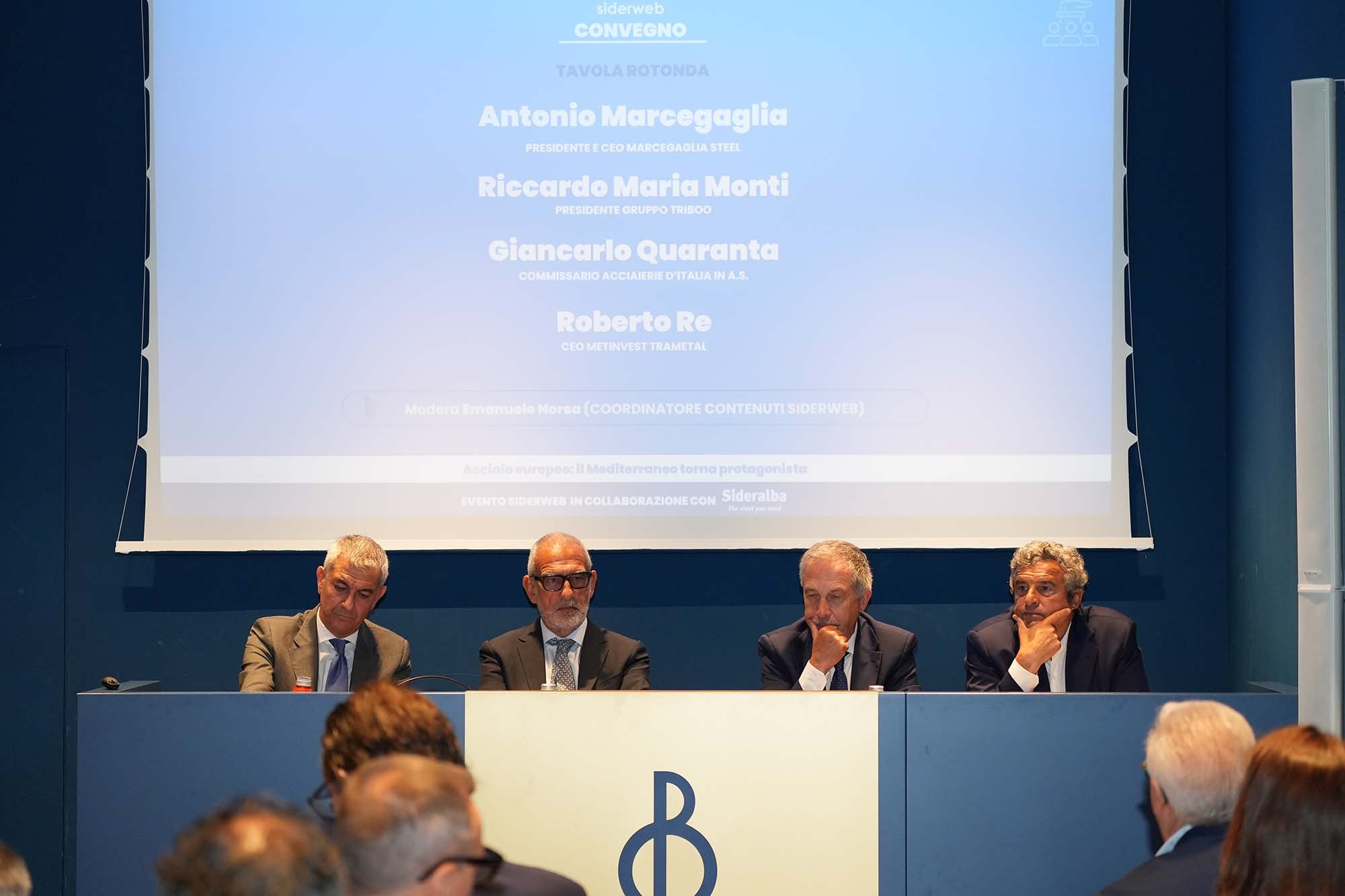
Un'area
con criticità ma con grandi possibilità di crescita. Questo il quadro
emerso al convegno "Acciaio europeo: il Mediterraneo torna
protagonista", organizzato da siderweb in collaborazione con Sideralba
Il
Mediterraneo si conferma crocevia di investimenti e sviluppo per il
comparto siderurgico: 16 Paesi produttori primari di acciaio e un output
che nel 2024 è stato pari a poco più di 100 milioni di tonnellate,
superiore a quello degli Stati Uniti. Il ruolo centrale dell’area viene
confermato dal numero degli investimenti annunciati che renderanno il
Mediterraneo teatro di un grosso processo di sviluppo e di rinnovamento
della propria siderurgia.
Negli Stati dell'area ci sono una
quarantina di impianti che si affacciano direttamente sul mar
Mediterraneo, con una capacità produttiva complessiva di poco superiore
ai 90 milioni di tonnellate. «Uno dei dati più interessanti – ha rilevato Stefano Ferrari (Responsabile dell’Ufficio Studi di siderweb) – è
relativo al numero degli investimenti annunciati: sono in corso di
progettazione o realizzazione sei impianti greenfield e sei impianti
brownfield, per una capacità produttiva di circa 28 milioni di
tonnellate». Per quanto riguarda il commercio estero di acciaio,
il Mediterraneo è centrale per l'Italia, con il 20% dell'import
tricolore che proviene da Paesi che si affacciano su questo mare ed il
27% dell'export che è destinato nei medesimi Stati. «Il Mediterraneo presenta alcuni evidenti elementi di criticità – ha concluso Ferrari –, legati
all'eterogeneità politico-economica, alle incertezze geopolitiche e ai
conflitti in corso. Di contro, la numerosità della popolazione, gli
spazi di crescita economica presenti e la demografia di alcuni dei Paesi
esaminati delineano forti possibilità di sviluppo futuro per l'acciaio e
potrebbero contribuire anche alla crescita dell'acciaio "Made in
Italy"».
Paolo Morandi (Ceo di siderweb)
ha evidenziato la necessità di identificare le sfide e le opportunità
per la siderurgia europea, sottolineando in questo senso la centralità
del Mediterraneo per il futuro del settore in quanto area che
«rappresenta da sempre un crocevia commerciale tra Europa, Africa e
Asia».
In questa macroarea mediterranea sono necessari «progetti
mirati per il ripristino e la creazione di capacità produttiva.
Pertanto, investimenti come quelli avviati da Marcegaglia in Francia e
da Metinvest a Piombino, oltre al rilancio e alla modernizzazione
dell’ex Ilva di Taranto, sono esempi virtuosi dell’attenzione che la
siderurgia sta dedicando al Mar Mediterraneo», ha sottolineato Luigi Rapullino, Ceo di Gruppo Rapullino e Sideralba. «Il
comparto oggi sta fronteggiando l’incertezza derivante dalle guerre,
dalla prossima entrata in vigore del Cbam, dai costi dell’energia tra i
più elevati rispetto al resto d’Europa, dalla sovraccapacità globale.
Sfide che chiedono agli imprenditori del settore di guardare con
lungimiranza e di dimostrare, ancora una volta, quanto la siderurgia
italiana sia in grado di adattarsi e innovare. Però, per continuare in
questa direzione, serve la politica che, oltre che sulla produzione,
deve ragionare anche sulla concorrenza a basso costo dei Paesi terzi e
salvaguardare anche il settore della distribuzione e del commercio», conclude Rapullino.
Durante la tavola rotonda, Antonio Marcegaglia, presidente e Ceo di Marcegaglia Steel, ha dichiarato: «Considerando
che i consumi, in Europa, ma anche in tutte le economie avanzate, sono
strutturalmente in diminuzione, nel primo semestre di quest'anno la
domanda non è stata certamente brillante, ma ha tenuto se guardiamo allo
stesso periodo dell’anno scorso. Credo di poter dire che abbiamo anche
una percezione più negativa rispetto alla realtà. Io non sono così
pessimista: alla luce di una probabile normalizzazione del quadro
geopolitico, dei dazi, nonché dell’impatto sulle importazioni derivante
dalle quote di Salvaguardia e dalla Cbam, a partire dal quarto trimestre
prevedo un recupero della domanda apparente e anche dei prezzi e,
quindi, della marginalità. Questo recupero potrà consolidarsi nel 2026,
anche grazie alla messa a terra dei progetti del Pnrr. Non
dimentichiamo, infine, che il nostro Paese sta performando meglio di
altri, a partire da Germania e Francia, e ha un tessuto imprenditoriale
resiliente e capace di adattarsi direi quasi all’istante».
Riccardo Maria Monti, presidente di Gruppo Triboo, ha dichiarato l’interesse del Gruppo Jindal verso il siderurgico tarantino, in particolare «dopo
la realizzazione del proprio progetto in Oman e dal bisogno del gruppo
di avere un punto di sbocco per l’Italia, l’Europa e il Mediterraneo». Per la siderurgia italiana e l’area mediterranea sarà fondamentale «creare
una filiera integrata che tenga conto di tutti gli attori presenti ed
emergenti, come Libia, Turchia, Egitto e la nuova Siria. Il mar
Mediterraneo rappresenta il futuro della nuova filiera globale
dell’acciaio, caratterizzata da catene del valore più corte rispetto al
passato, e l’Italia sarà centrale per la sua straordinaria capacità di
competere». Questi fattori – ha concluso Monti – «spiegano il grande interesse di Jindal, anche se adesso c’è una altro attore prioritario nella trattativa».
Roberto Re, Ceo degli asset produttivi di Metinvest in Italia, ha evidenziato la centralità di Piombino nel panorama degli investimenti del Mediterraneo. Re ha dichiarato: «L'idea
di investire in un impianto di produzione di coils nasce nel 2018, ma
ha subito un'accelerazione in seguito all’aggressione russa e alla
distruzione della capacità produttiva del gruppo. Metinvest si è trovata
nella condizione di dover investire e di riprendersi quei mercati nel
quale eravamo attori protagonisti». Perciò, per la sua posizione e «la
sua storia siderurgica, la decisione di investire in Italia è stata
naturale, in particolare in una zona con un know-how di un certo livello
come Piombino», ha continuato Re. Il progetto si trova dunque «in
una fase avanzata, è già stato ingegnerizzato e il 23 maggio scorso
abbiamo raggiunto l’accordo di programma con le istituzioni. Questo ci
permetterà di potare a termine un investimento da circa 2,5 miliardi di
euro che sarà in grado di produrre attorno ai 2,7 milioni di tonnellate
di coils a caldo, con l'obiettivo di avviare la prima produzione a fine
del 2028». Il mercato di riferimento della nuova acciaieria sarà pertanto «quello
italiano e quello del bacino del Mediterraneo, accelerando un progetto
che utilizzerà rottami ferrosi e Dri e sarà anche predisposto
all’utilizzo dell’idrogeno green».
Giancarlo Quaranta, commissario di Acciaierie d’Italia in A.S., ha sottolineato come il punto di svolta per il futuro siderurgico tarantino sia l’accordo di programma. «In questa fase – ha detto – non
è possibile entrare nel merito della trattativa di vendita per motivi
di riservatezza, ma una delle condizioni indicate da tutti i
partecipanti al bando di gara è il rilascio dell’AIA, rispetto al quale
l’accordo di programma è propedeutico. La decarbonizzazione del sito ha
assunto un ruolo determinante e condiviso da tutti i soggetti coinvolti.
Si è consapevoli che una transizione ecologica così radicale richiederà
il tempo necessario all’approvvigionamento e all’installazione delle
necessarie unità produttive, che gradualmente porteranno alla fermata
degli impianti attuali. Parallelamente sarà indispensabile ricorrere al
riassetto della politica di approvvigionamento energetico e delle
materie prime essenziali al nuovo processo produttivo, sostituendo il
minerale di ferro col DRI».
Mechanical exports exceed 20 billion euros in the first half of the year
The figures presented at Anima Export Days 2026: +2.8% compared to the same period last year. Exports are growing in the USA, China, and Germany. Exports of the mechanical engineering sector represented by Anima Confindustria reached €20.4 billion in the first half of 2026, up 2.8% compared to the same period in 2025. The data, processed by Anima's Statistics Office based on Istat data, were presented during the Brescia leg of Anima Export Days , the initiative dedicated to the internationalization of the Italian mechanical engineering sector. Running from September 28th to October 1st, the event is bringing together companies in the sector with selected international buyers. Now in its sixth edition, the Export Days are a collaboration between Anima Confindustria, the Ministry of Foreign Affairs and International Cooperation (MAECI), and the Italian Trade Agency (ITA), with the aim of fostering new trade relations and supporting the strengthening of Italian companies' presence in foreign markets . This year, the B2B meetings involve operators from over 20 countries and are taking place in four locations : Borgosesia, Turin, Brescia, and Bassano del Grappa. The initiative comes at a time when geopolitical tensions and uncertainties over trade policies continue to impact international trade. Against this backdrop, data for the first half of 2026 paint a resilient picture for the mechanical engineering sector, represented by Anima. Exports from Anima's sectors totaled €20.4 billion , up 2.8% from €19.8 billion in the same period in 2025. The trend confirms the sector's strong international vocation , albeit with varying trends. The main export components include valves and faucets , gas turbines, hydraulic pumps, and air conditioning systems. Other sectors are showing positive results, while others are experiencing a decline. Geographically, the United States remains the leading destination market for exports in the animal and animal sectors, with €2.38 billion in the first six months of 2026, up 2.4% compared to the same period of the previous year. Germany follows, with €1.99 billion (+4.8%), and France, with €1.81 billion (+2.9%). Alongside the more established European markets, some particularly significant trends are emerging in non-EU areas, starting with China, the Middle East, and North Africa. Despite a general decline towards the Gulf countries (-3.7%), exports to Saudi Arabia grew by 14.6% (665.1 million euros) , supported by the sectors related to process plants, energy, infrastructure and cooling. In China , exports of the Anima sectors grew by 22.3% and reached almost 720 million euros . The aeraulic systems sector was the main driver of this increase. Steam turbines and air compressors also recorded good growth in China. Algeria's growth was even more significant, rising 146.7% from €173.3 million to €427.6 million. This result was primarily driven by technologies such as gas turbines (which account for approximately 47% of total exports to the country), valves and taps, as well as pressure products and equipment. These flows are often tied to individual orders and therefore not necessarily characterized by continuous trends, but the data highlights the ability of Italian companies to seize opportunities even in rapidly developing markets. "The 2.8% growth in exports in the first half of the year confirms the ability of Italian mechanical engineering to maintain a competitive position on international markets, even in a period characterized by geopolitical tensions and trade uncertainty. The United States remains the primary destination market, while the results in China and Algeria demonstrate the ability of companies to seize opportunities in different markets. This is a sign of resilience that must be accompanied by greater diversification and a strengthened international presence. In this regard, the Export Days represent a concrete tool for creating new relationships and business opportunities," stated Pietro Almici, president of Anima Confindustria . On the import front, in the first six months of the year, the Anima sectors recorded a 1.2% increase, for a total value of 9.73 billion euros; this figure completes the current trade picture and confirms the centrality now assumed by international markets beyond the European one. It is in this context that Anima is renewing its Export Days , transforming market analysis into a concrete opportunity for supply and demand to meet.
 Industriale.it certification