Proving absolute effectiveness compared to competing high-volume drilling solutions
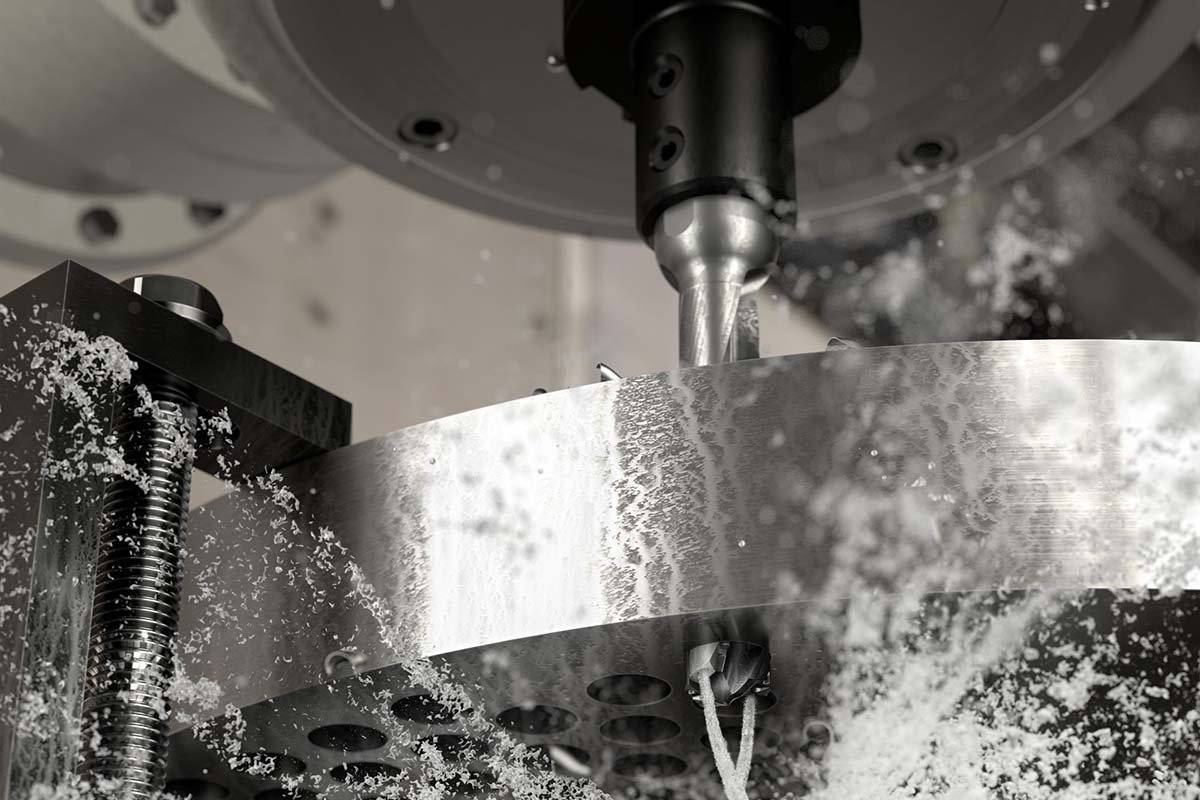
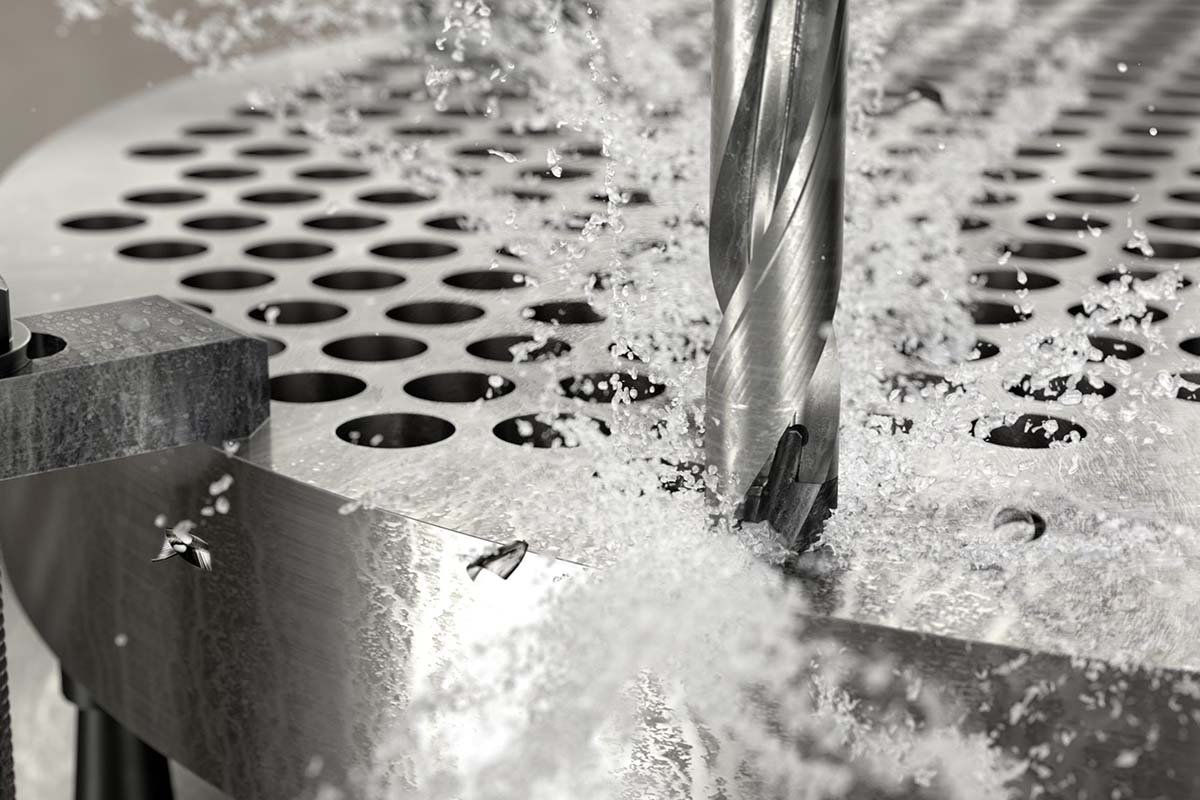
When Sandvik Coromant launched CoroDrill® DE10 in March 2025, the goal wasn't simply to introduce a new drilling tool. The exchangeable-tip drill was the first of its kind in high-volume drilling, offering a plug-and-play approach and a universal M5 geometry for faster, higher-quality results and greater versatility. But none of these advantages really make a difference until you understand their importance in real-world situations. In this article, Mikael Carlsson, Global Product Specialist for Indexable Rotating Tools at Sandvik Coromant, shows what the CoroDrill® DE10 can do.
This tool was developed with three main goals in mind: ease of use, reliable performance, and adaptability. It features a patented tip-body interface and a high-strength steel drill body, which together ensure maximum stability under demanding cutting parameters.
One of the most innovative features of this tool is the injection-molded solid carbide tip, a first for Sandvik Coromant. By adapting the powder injection molding process, traditionally reserved for plastics, the team was able to achieve a more precise and consistent tool geometry. This has enabled greater control of the drill center and a more robust corner design, ensuring reliable tool performance even under challenging cutting conditions.
Another key feature of CoroDrill® DE10 is the patented pre-tension clamping interface, which combines intuitive design with superior security. This interface enables quick and easy drill bit changes without spare parts, ensures reliable drilling at high speeds and feeds, delivers higher clamping force, and produces straighter holes with tighter tolerances without the need for a pilot drill. Furthermore, thanks to its longer drill body life, CoroDrill® DE10 is the most robust exchangeable-head drill of its kind.
However, regardless of these advantages, a tool must prove its worth in real-world machining environments if it is to truly transform the way manufacturers approach holemaking operations.
A tool that makes a difference in ISO P applications
Following its launch, Sandvik Coromant decided to test the performance of CoroDrill® DE10 through an extensive global benchmarking program. Over several months, four Sandvik Coromant Centers (in Sandviken, Sweden; Renningen, Germany; Chongqing, China; and Mebane, USA) conducted rigorous tests in real-world production scenarios. Each site applied standardized cutting parameters on different materials, such as steels (ISO P1 and P2) and stainless steels (ISO M1), comparing CoroDrill® DE10 with leading market competitors.
For a complete overview of the tool's performance, several properties were tested and analyzed: hole diameter, surface quality, burr height, chip formation, tool life and process security were evaluated and compared with six competitors' solutions, using the same cutting data in each test for the three materials tested.
The results were always in favor of CoroDrill® DE10. At Sandviken, where tests on high-strength ISO P2 materials pushed the drills to their limits, CoroDrill® DE10 achieved H9/H10 hole tolerances with exceptional process security, while the other two tools tested failed to achieve this level of accuracy. CoroDrill DE10 achieved consistent surface quality (Ra 0.8–1.3 µm) without damaging the tool, while competitor tools suffered chipping or edge wear despite having similar surface roughness.
Other ISO P tests showed encouraging results. In Germany, where tests were performed on an ISO P1 workpiece, CoroDrill® DE10 improved or maintained surface finish values under optimized conditions (1.2–1.9 µm), while a competitor's tool significantly deteriorated to values of 3.3–3.8 µm, even after optimization – a sign of process instability and poor edge quality. The other competitor showed an inconsistent surface finish from the start and was not subjected to further testing due to unsatisfactory performance.
Images from the wear tests conducted in Chongqing undeniably demonstrate that CoroDrill® DE10 offers more stable and predictable wear patterns than competitors. CoroDrill® DE10 showed only slight flank wear and minor abrasion after 41 meters of drilling, with no edge fractures observed. The wear was uniform and predictable, indicating controlled cutting forces and stable chip evacuation. On the other hand, a competitor achieved a similar cutting length, but experienced corner fracture and cutting edge damage. These wear phenomena, linked to underlying brittleness, are a sign of instability, most likely due to chip adhesion or microfractures on the cutting edge. Another competitor reported significant wear after just 38 meters, with chipping of the cutting edge and poor coating integrity.
Highest precision in ISO M
The strengths of CoroDrill® DE10 were also evident in tests on ISO M materials. At the Mebane facility, the tool performed better in every test, outperforming competitors thanks to the best compromise between precision, surface quality, stability and tool life.
In the tests, CoroDrill® DE10 achieved a high level of precision in the hole diameter (in a range of 13.03–13.05 millimeters) while maintaining a uniform surface finish (Ra 0.7–1.0 µm). It completed over 52.5 meters of holes without reaching its tool life limit, unlike the other tools, which reached their wear limits at the same cutting length.
The results for ISO M1 materials were also positive for Sandviken. CoroDrill® DE10 exceeded 76 meters of drilling and was still usable, while the competitor stopped at just 53 meters with initial chip formation deterioration. The tool also maintained consistent hole diameters of 13–13.02 millimeters, meeting H9/H10 tolerance classes. The competitor tool, however, produced slightly undersized holes of 12.99–13.02 millimeters. While this is an infinitesimal difference, even the smallest deviation in hole size can cause problems with real-world part assembly.
It's one thing to bring a new solution to market, but demonstrating its capabilities versus competing solutions is another challenge entirely. The innovations behind CoroDrill® DE10 aren't just exciting; they make a real difference in high-volume drilling.
Learn more about CoroDrill® DE10 by viewing technical insights, videos, and customer success stories on the Sandvik Coromant website.
Duratomic® technology raises the bar in steel turning
Seco® introduces TP3502, a new CVD-coated Duratomic® turning insert that represents a breakthrough in insert design for ISO P steel applications. Thanks to continuous improvements in manufacturing methods, TP3502 establishes itself as the new benchmark in performance. The result is exceptionally stable and predictable tool life, even under interrupted cutting and varied machining conditions. A new benchmark for steel turning TP3502 was developed for steel machining applications involving varying material hardness, complex component shapes, and interrupted cuts. Positioned as a versatile ISO P insert, it balances wear resistance and toughness in a wide range of applications. Rated in the ISO P35 range, TP3502 is designed to compete with CVD inserts in steel turning. The insert features an updated coating and cutting edge preparation designed to produce a more controlled wear progression and longer insert life than previous generations. The goal is to enable higher cutting speeds while maintaining process stability and consistent part quality. Designed for interrupted or variable cutting conditions TP3502 is an insert for turning steels, from low-alloy steels and stainless steels to ductile irons and powder metallurgy materials. These applications often involve interruptions and variable cutting conditions, requiring both toughness and reliable performance. "With TP3502, the focus is on improving process reliability in steel turning," says Mikael Lindholm, Global Product Manager General ISO Turning at Seco. " This stability allows manufacturers to increase cutting data and simplify production planning ." The insert also incorporates features to support digitalization and sustainability initiatives. Chrome edge detection is designed to help operators maximize the use of each cutting edge, while a Data Matrix code enables digital traceability and monitoring. The TP3502 is manufactured using recycled powder and is included in the recycle-buy-back program, supporting waste reduction and sustainability reporting.

 Industriale.it certification