New AXL 15 iGo autonomous electric pallet truck

Opublikował 07/05/2026
New AXL 15 iGo autonomous electric pallet truck

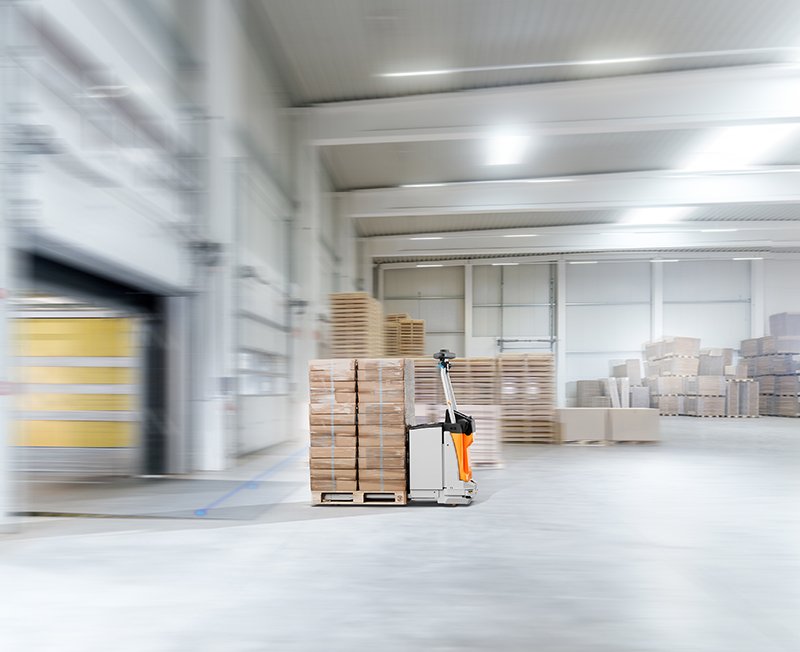
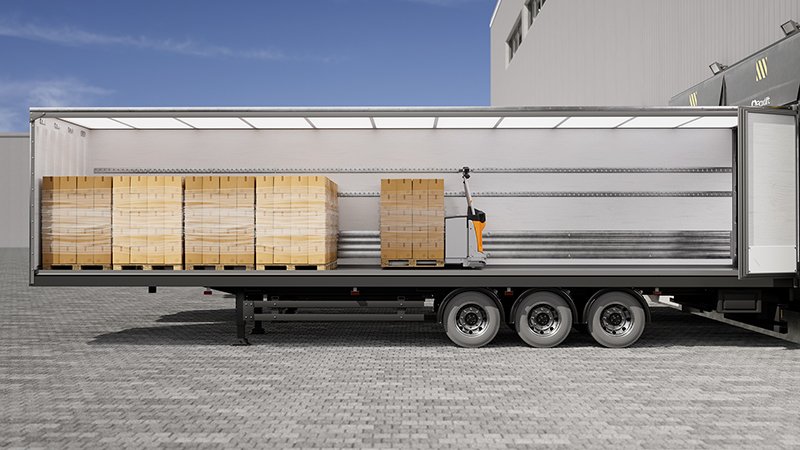
STILL, a leading supplier of intralogistics systems and equipment, presented a true milestone in intralogistics at LogiMAT 2026: the first production-ready solution on the market for automating truck loading and unloading without the need for fixed safety technology at the loading bay. With the new autonomous AXL 15 iGo electric pallet truck , STILL closes one of the last major gaps in warehouse automation: the management of incoming and outgoing goods directly at the loading bay.

Automation comes to the loading bay

The loading bay area is traditionally characterized by tight deadlines, staff shortages, night shifts, and challenging operating conditions, from high summer temperatures to freezing winter temperatures. Furthermore, limited space, variable trailer geometries, and very stringent safety requirements must be addressed. While many companies have long since automated warehouses, internal transport, and handling systems, truck loading and unloading has remained a process considered difficult to automate.

With the AXL 15 iGo, we're filling a historic gap in intralogistics, making automated truck loading and unloading an accessible and easily implementable standard for the first time ,” explains Matteo Piantanida, Head of Sales Automation at STILL in Italy. “ Our solution makes receiving and shipping goods more efficient, safe, predictable, and reliable. Process standardization enables repeatable workflows, significantly increasing operational stability and transparency. This is a key step in our strategy: to offer scalable automation solutions for every area of ​​intralogistics .”

Thirty pallets in thirty-five minutes in an autonomous, flexible and safe way

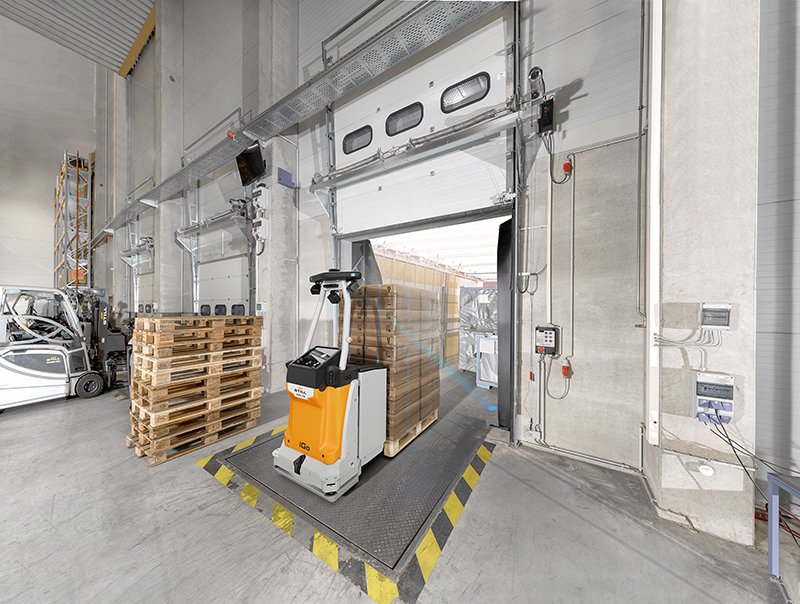
The AXL 15 iGo autonomous pallet truck was specifically developed for automating truck loading and unloading: two vehicles operating in tandem can autonomously load up to 30 EPAL pallets in approximately 35 minutes. Thanks to innovative localization and positioning logic integrated with a new, holistic safety concept, the truck can automatically recognize the trailer's internal configuration and precisely position the pallets. A particularly significant advantage for users is that the AXL 15 iGo does not require any fixed safety systems at the gate, such as scanners or reflectors installed on the bay or in the trailer. This makes the solution highly flexible, quick to implement, and easy to integrate into existing operations.

Safety and precision in the tightest spaces

To ensure safe handling and precise navigation, the AXL 15 iGo uses two complementary technologies : on the outside of the trailer, it uses Visual SLAM 3D localization technology; on the inside, it uses LiDAR-based localization, which allows for centimeter-level accuracy. The truck also integrates LiDAR safety scanners, camera systems, light and acoustic signals, and 3D pallet detection.

A solution for multiple sectors

The AXL 15 iGo is particularly suited to sectors with high volumes of pallets and standardized load units, such as 3PL operators, food logistics, retail, and manufacturing companies. With a load capacity of up to 1,500 kg and a speed of up to 2 m/s, the truck can meet a wide range of industrial needs. Integration into automated fleets is scalable via a VDA 5050 interface, a dedicated fleet manager, and open APIs for warehouse management systems (WMS).

World premiere at LogiMAT 2026

STILL presented the AXL 15 iGo to the public for the first time at LogiMAT 2026. “ Our customers ask us for solutions that can be implemented immediately. This is why we chose to launch the product only once it was ready to be put on the market quickly ,” says Piantanida.
Aby uzyskać więcej informacji: Still
New AXL 15 iGo autonomous electric pallet truck

Inne artykuły, które mogą Cię zainteresować

A look ahead to 2026 - shaping industry with people, technology, and sustainability

2026 has begun, and transformation across all industries is accelerating. Sustainability, digitalization, and talent development are now firmly at the top of the manufacturing agenda, redefining the way companies operate and compete. Against this backdrop, Helen Blomqvist, President of Sandvik Coromant, reflects on more than 80 years of market leadership in the cutting tools industry and the forces that will shape the years to come. We build the future on the foundations of our heritage Sandvik Coromant's position as a global leader in cutting tools and manufacturing solutions is rooted in its history, but it is also firmly oriented towards the future. At a time when transformation is at the top of the global agenda, we actively support customers around the world, helping them navigate change and seize new opportunities. Leadership in a changing world requires clarity of direction without losing sight of our roots. Even with a strong brand and a proud history, we cannot rest on our laurels; we must strive to grow and be effective today, while simultaneously transforming our capabilities to remain the undisputed market leader tomorrow. A key part of this approach is creating a culture of learning. Psychological safety and curiosity are essential, and it's crucial to create an environment where people feel safe to experiment with new ideas. High-performing and empowered teams, with a strong customer-focused mindset, are at the heart of how we translate strategy into action. Eliminating the fear of failure, combined with curiosity and a strong customer focus, is essential to moving forward. A sector in full transformation The manufacturing sector is experiencing a rapid technological leap. But it's important to recognize that this represents an opportunity, rather than a threat. The sector is undergoing significant change, with customers at different stages of the journey. Sustainability, digitalization, severe cost pressures along the entire value chain, and the skills gap are the trends characterizing this shift. This is particularly evident in sectors like aerospace, where growth is driven by the demand for lightweight structures, next-generation engines, and greater fuel efficiency. These requirements are accelerating the adoption of advanced materials like titanium and heat-resistant superalloys, pushing manufacturers to invest in more sophisticated processing technologies. Market forecasts, such as those detailed in the Deloitte 2026 Aerospace and Defense Industry Outlook, point to a new era of growth, with global aircraft production accelerating thanks to recovering passenger demand, intensified fleet modernization, and the beginning of OEMs' clearing of long-standing backlogs. At the same time, defense and space programs continue to expand, creating sustained demand for high-performance materials and precision components. Together, these forces are driving one of the strongest production cycles the aerospace industry has seen in over a decade. AI as a strategic driver for people and production Artificial intelligence is moving beyond experimentation to become an essential tool. Across industries, leaders are integrating AI into operations, supply chains, purchasing, and quality control. Sandvik Coromant has recognized this for several years and has a dedicated AI team focused on getting the most out of the technology. The organization isn't alone in this: data from Xometry's Manufacturing Outlook 2026 reveals that 82% of executives consider AI a key growth driver, with nearly half already reporting significant ROI. Artificial intelligence has moved beyond the hype stage to become a fundamental tool for manufacturing, and its adoption is expanding in critical areas such as supply chain, purchasing, and quality control. Looking to the future, we can expect AI systems to be fully integrated into smart factory operations. Machines will learn and adapt in real time, intelligently optimizing production parameters, reducing waste, and proactively scheduling maintenance. Looking ahead, the manufacturers that will succeed in 2026 will be those that treat AI not as a standalone technology, but as a strategic capability woven into culture, processes, and leadership, leveraging data and automation to unlock new levels of efficiency, resilience, and customer value. Used responsibly and transparently, AI will be a critical driver of productivity, sustainability, and long-term competitiveness across the entire manufacturing ecosystem. Sustainability translated into action It's difficult to look at the future of manufacturing, both short and long-term, without considering its impact on our planet. "We can choose to lead or be led to ruin," said United Nations Secretary-General António Guterres at the opening of the COP30 climate conference held in Belem, Brazil, in November. "Choose speed, scale, and solidarity. Choose to make this moment a turning point. Stand up for science. Stand up for justice and future generations," he urged. His words reflect a truth the industry can no longer ignore: sustainability is not optional, but a determining force in the way manufacturers operate. What matters now is the ability to translate ambition into concrete, scalable initiatives that deliver real environmental and commercial value, especially at a time when the prices of critical raw materials like tungsten and other metals are rising sharply, putting further pressure on manufacturers' cost structures. At Sandvik Coromant, this shift is already underway. One example is our buyback program, which allows customers to sell used carbide tools back to us for recycling and circular production. In a market where raw material prices are rising significantly, circular solutions like this help both customers and suppliers reduce exposure to volatile input costs while strengthening long-term resource security. Supported by a digital portal, the program simplifies logistics, pricing, and CO2 reporting, while reducing the need for virgin raw materials. It transforms circularity from a concept to a practical, everyday process in the workshop. We are also developing similar digitalized processes for our remanufacturing offering, enabling customers to maximize their inventory and leverage easy-to-use self-service platforms, improving efficiency, extending tool life, and supporting margin resilience in an increasingly cost-constrained environment. Another important initiative is the Sustainability Analyzer, which we launched in 2025. Through this tool, our team can clearly demonstrate the CO2 reductions customers can achieve by using more efficient processing solutions, making sustainability measurable and actionable in investment and production decisions. Looking ahead to 2026, sustainability will be increasingly data-driven and integrated into core manufacturing workflows. Customers will expect transparent carbon metrics along with performance and costs, and suppliers will be judged on their ability to support decarbonization across the entire value chain. Digital tools will play a central role in enabling this shift, transforming environmental impact into a shared and quantifiable responsibility. Looking to the future Customers are already starting to expect more than just the products they buy. They're looking for solutions that create value through strategic partnerships, digital innovation, and a shared commitment to sustainable manufacturing. Sandvik Coromant is strongly positioned for the future, combining today's performance with tomorrow's transformation, serving as both a natural partner in industrial matters and an employer of choice. Contributing to learning, innovation, and building strong teams is the hallmark of success. Sandvik Coromant Together with customers and partners, Sandvik Coromant paves the way to a sustainable future and provides tooling solutions to mechanical engineering industries worldwide. Over eighty years of practical experience have allowed us to build a wealth of knowledge in metal cutting and machining. This expertise transforms every challenge into an opportunity for innovation, collaboration, and cutting-edge solutions. Our goal is to pursue positive change by promoting sustainability, efficiency, and growth to shape a future where innovation is at the forefront. Part of the global industrial engineering group Sandvik, Sandvik Coromant is committed to building the future, together with its customers.

Auma at ivs 2026: electric actuation technologies serving a changing industry

AUMA Italiana, a national and international point of reference for electric actuation solutions for industrial valves, will participate in the sixth edition of IVS - Industrial Valve Summit , scheduled to take place at the Bergamo Fair from 19 to 21 May 2026. IVS is now much more than a trade show: it's the place where the entire industrial valve and flow control supply chain meets to discuss ongoing transformations, from new energy scenarios to plant digitalization. In this context, AUMA Italiana confirms its presence to actively contribute to the dialogue between valve manufacturers, EPCs, and end users, placing application experience and technological vision at the center. During the three-day Summit, AUMA will have its own exhibition space to meet with customers and partners and present electric actuation solutions designed to make systems more reliable, efficient, and future-proof . These technologies go beyond valve actuation to integrate advanced diagnostics, communication, and maintenance support features, simplifying the daily work of those managing complex systems. The key themes at IVS 2026, from artificial intelligence to applications for hydrogen, renewables, CCUS, and nuclear power, reflect a rapidly evolving industry. It is precisely in this context that electric actuation is taking on an increasingly strategic role, becoming a key element in ensuring operational safety, service continuity, and intelligent process control. AUMA Italiana will bring to the trade fair its expertise, developed over decades of field applications, in sectors where precision and reliability are not an option but a necessity. "IVS is a valuable opportunity to engage directly with the entire industry community," comments Andrea Villa , Managing Director of AUMA Italiana. "Being present means listening, sharing experiences, and contributing to the development of solutions that increasingly meet the industry's real needs." With a global presence and a strong focus on research and development, AUMA continues to invest in technologies that can drive the evolution of the valve industry, supporting customers and partners on a journey of concrete innovation, long-term reliability, and a focus on sustainability. AUMA awaits you at IVS - Industrial Valve Summit 2026, Hall A - Stand 32 , to meet, exchange ideas and discuss the future of industrial valve automation.

Strategic use of ceramics in cast iron processing

Productivity and process stability engineering in cast iron processing. With the global manufacturing industry under increasing pressure from volatile raw materials and concentrated supply chains, many machining operations are reevaluating how critical tool materials are used in their processes. Tungsten-based carbide remains indispensable in a wide range of applications. However, its dependence on tungsten—a strategically sensitive raw material—is forcing manufacturers to reexamine where this material offers the greatest value and where alternative materials can provide tangible technical advantages. Thanks to its extensive experience in ceramic materials engineering and application development, NTK improves the performance of cutting tools in the most demanding environments. In cast iron machining, these ceramic grades represent one of the most durable solutions for high-temperature applications. Where ceramics offer a technical advantage Machining cast iron generates extremely high temperatures at the cutting edge, especially during dry machining and at high cutting speeds. Under these conditions, aluminum oxide and silicon nitride ceramics maintain hardness and wear resistance beyond the limits of conventional carbide. In stable operations dominated by thermal loads, ceramics allow: higher cutting speeds reduced cycle times uniform abrasive wear in cast iron reliable performance in dry machining These advantages are based on the principles of materials science and are confirmed in production environments where thermal resistance determines tool life. Strategic distribution of cutting materials Ceramics are not destined to replace carbide in all operations. Carbide continues to excel in operations with severe interruptions in cut, low-rigidity setups, and applications requiring maximum edge toughness. The opportunity lies in identifying operations where thermal loads predominate over mechanical shocks. Under these conditions, ceramic grades can offer significant productivity improvements, while carbide remains the ideal solution when toughness is crucial. This targeted approach improves overall process efficiency and reduces dependence on a single cutting material. NTK ceramic solutions for cast iron processing The NTK ceramic range has been specifically developed for the machining of cast iron: SP9 - Coated silicon nitride grade for roughing to finishing operations on grey and ductile iron SX6 - High toughness silicon nitride ceramic for demanding roughing on gray cast iron, even on surfaces with fusion crust HC1 / HW2 - Aluminum oxide ceramics optimized for high-speed finishing of gray cast iron These grades are widely used in the automotive, heavy machinery, pump and valve components, and industrial casting manufacturing industries. Real-world production cases demonstrate significant increases in cutting speeds and productivity in components such as wheel hubs and structural casings, where ceramic grades have successfully replaced carbide in selected operations. Efficiency in large-scale production Higher cutting speeds reduce machining time per component and improve spindle efficiency in high-volume production. In many cast iron machining applications, ceramic tools can operate dry, reducing or eliminating the use of coolant. In addition to the productivity benefits, this approach reduces energy consumption per part and reduces the need for cutting fluid management and disposal, contributing to more resource-efficient production. Engineering the process The adoption of ceramic tools in cast iron processing is not a simple replacement, but an intelligent application. Aligning tool material properties with the predominant stresses of each operation—thermal or mechanical—allows for the development of a more targeted, performance-oriented machining strategy. When applied under the correct conditions, advanced NTK ceramic grades increase productivity while maintaining process stability in the most demanding cast iron machining operations. About NTK Cutting Tools NTK Cutting Tools, a member of the IMC Group, is a global supplier of advanced cutting tool solutions for the metalworking industry. The company is recognized for its expertise in ceramic tools for high-temperature machining and as a specialist in micromachining and Swiss-type machining applications, where precision and process stability are crucial. With a wide range of cutting tool solutions, NTK helps manufacturers increase productivity, ensure process stability, and improve resource efficiency in highly demanding industries, including aerospace, automotive, medical, electronics, and general engineering.

Zapisz się do naszego newslettera
Być na bieżąco z najnowszymi wiadomościami o świecie przemysłowym
Biuletyn obrazkowy Lindustriale
Dati Legali

L'industriale s.r.l.
P. IVA: 12212870153
Codice Fiscale: 12212870153

Sede Legale

Via Carlo Dolci, 32
20148 Milano (MI)
Italy

Registro Imprese

Iscrizione R.I.: 12212870153
REA: MI-1539011
Capitale sociale: Euro 10.400,00 i.v.

Top
This website is protected by reCAPTCHA, therefore the Google privacy policy and terms of service apply.