
2025 proved to be a generally weak year for the Italian machine tool, robot, and automation manufacturing industry, with production essentially stagnating compared to the previous year. This disappointing result was driven by the sharp decline in exports. Domestic market activity fared better, driven by the recovery in demand, but despite double-digit increases, figures were still far from 2021-2022 levels.
Despite this, the Italian industry in the sector confirmed its position, once again, as a major player on the international scene, ranking fifth in the world for production and consumption and fourth in exports.
Forecasts for 2026 predict a modest recovery driven by improved collection performance on the domestic market, thanks in part to the availability of the Hyper-Depreciation program. Activity abroad remains weak.
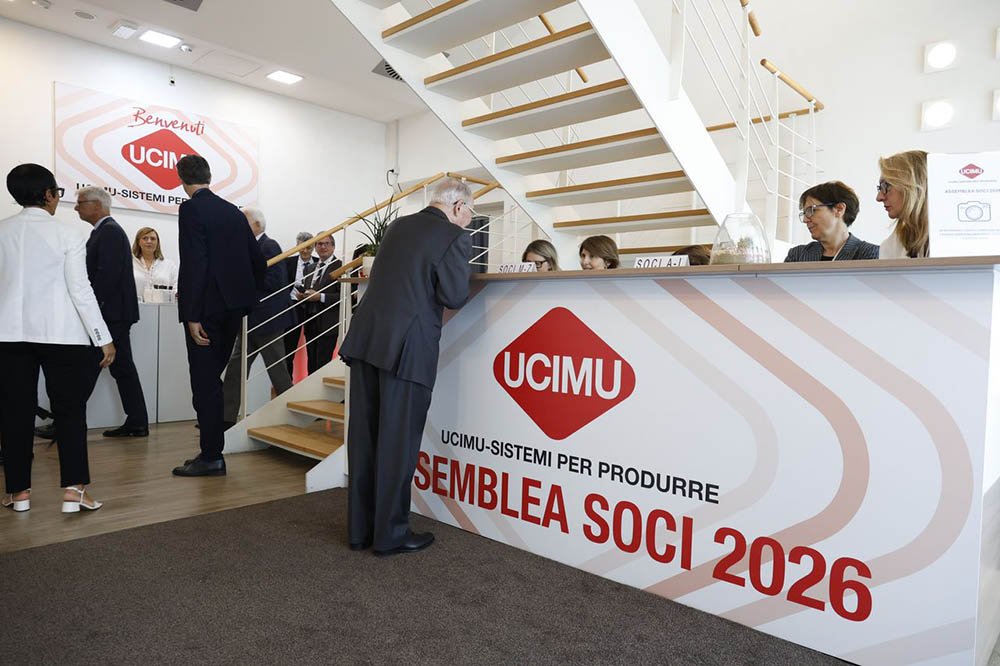
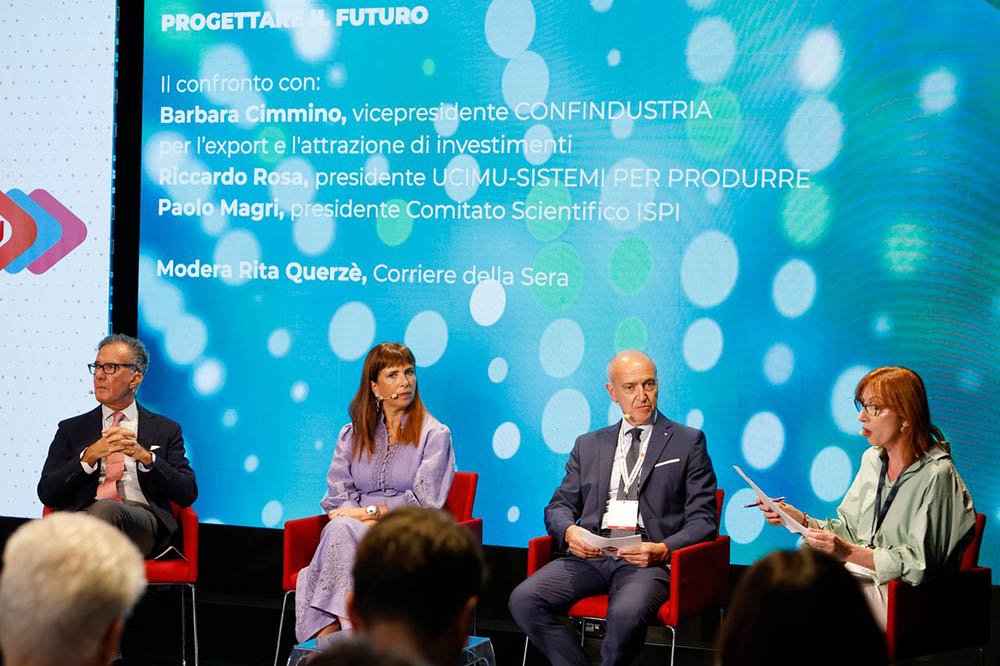
This, in short, is the framework outlined by Riccardo Rosa, President of UCIMU-SISTEMI PER PRODURRE, during the Shareholders' Meeting. The meeting was attended by Barbara Cimmino, Vice President of CONFINDUSTRIA for Exports and Investment Attraction, and Paolo Magri, President of the ISPI Scientific Committee. Both were moderated and interviewed by Rita Querzè, a journalist for Il Corriere della Sera.
This was followed by a discussion between two young entrepreneurs, Luca Dadone and Elisa Stucchi, who shared their vision for innovation, using AI and augmented reality applied to the manufacturing world.
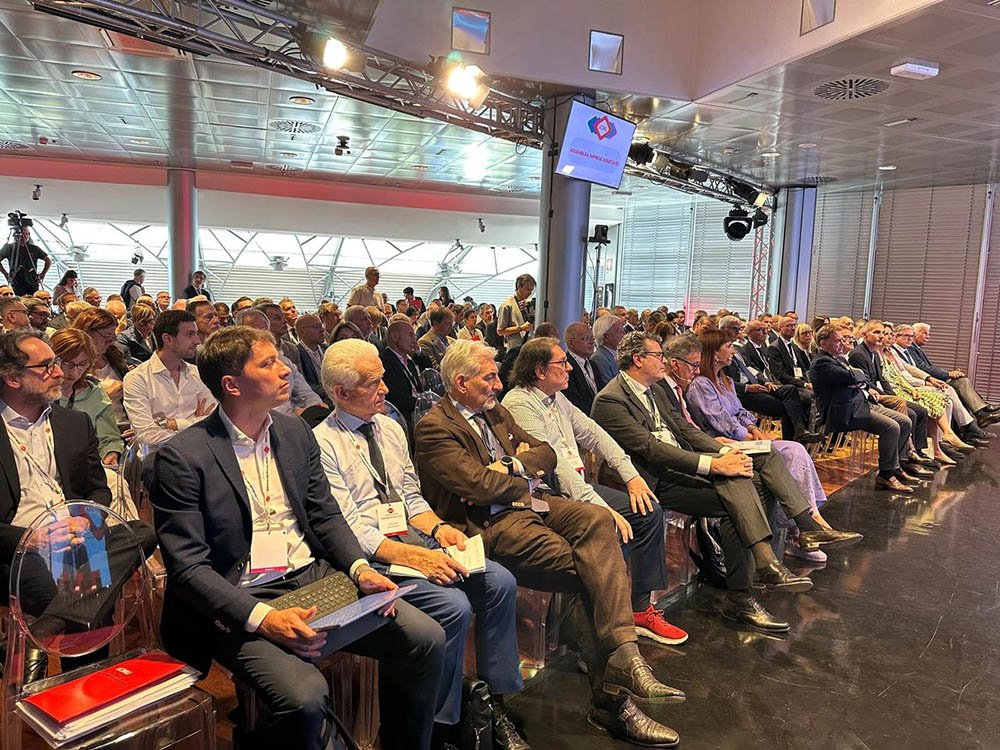
Over 150 guests attended, including entrepreneurs and managers from the sector, institutional representatives, and journalists.
THE 2025 FINANCIAL STATEMENTS
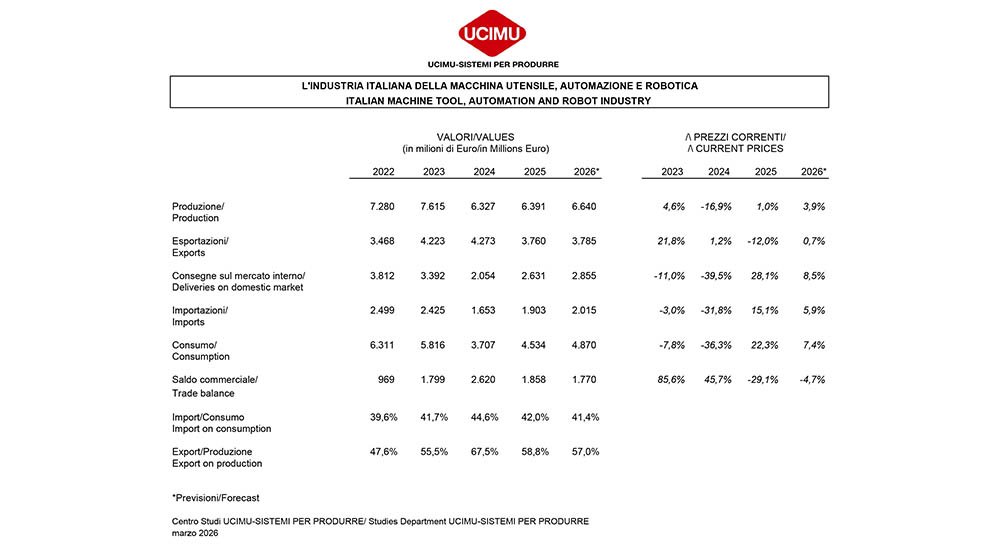
According to the final data processed by the UCIMU Study & Business Culture Center, in 2025, Italian production of machine tools, robots, and automation systems reached 6,391 million euros, up 1% compared to 2024.
Exports saw a significant decline, dropping 12% to €3,760 million. The export-to-production ratio fell to 58.8%, compared to 67.5% in 2024.
In 2025, the main outlet markets for Italian offerings were: United States (572 million, -9%), Germany (274 million, -24.9%), France (204 million, +0.2%), Poland (188 million, +11.2%), Turkey (168 million, -11.5%), India (164 million, -11.6%), Mexico (158 million, -10%), Spain (147 million, -6.5%), China (110 million, -54.1%), Brazil (84 million, +15.9%).
After two years of decline, Italian manufacturers' domestic deliveries returned to growth, reaching €2,631 million, up 28.1% from the previous year. This performance was driven by the recovery in domestic consumption, which rose 22.3% to €4,534 million.
Imports stood at 1,903 million euros, up 15.1% compared to 2024. The share of domestic consumption covered by foreign supplies fell by three percentage points to 42%.
Production capacity utilization declined, with the annual average falling from 77.3% in 2024 to 76.5%. The same trend was observed for the order book, which stood at 6.3 months of guaranteed production, compared to 6.5 months in 2024.
The sector's turnover stopped at 9,330 million euros.
THE 2026 FORECASTS
According to forecasts developed by the UCIMU Study & Business Culture Center, 2026 will see a slight recovery in the Italian machine tool, robot, and automation manufacturing industry. All indicators will return to positive territory, but increases will still be limited.
Production will reach €6.64 billion (+3.9%). Exports will remain at the previous year's level, reaching €3.785 billion (+0.7%).
The positive trend in domestic deliveries by manufacturers will continue, expected to grow by 8.5% to €2,855 million, driven by Italian demand, which is expected to reach €4,870 million (+7.4%).
Imports will also show a positive trend, reaching 2,015 million (+5.9%).
THE ITALIAN MACHINE TOOL INDUSTRY BETWEEN GEOPOLITICAL INSTABILITY AND INCENTIVES
Riccardo Rosa, president of UCIMU-SISTEMI PER PRODURRE, stated: "2025 was an overall disappointing year for Italian machine tool manufacturers, who had to contend primarily with a sharp decline in export sales. On the other hand, despite the recovery, domestic market activity was also unsatisfactory, partly due to the chaos surrounding Transition 5.0."
"On the international front, geopolitical instability has made the activity of the sector represented by UCIMU particularly complicated, as foreign markets are the main outlet for its production."
"That said, the events of recent years have subjected our businesses to a continuous stress test, training them to operate in unprecedented business conditions. For this reason too, " continued Riccardo Rosa, " we note that not everything that happens, directly connected to our world, impacts our business in the same way."
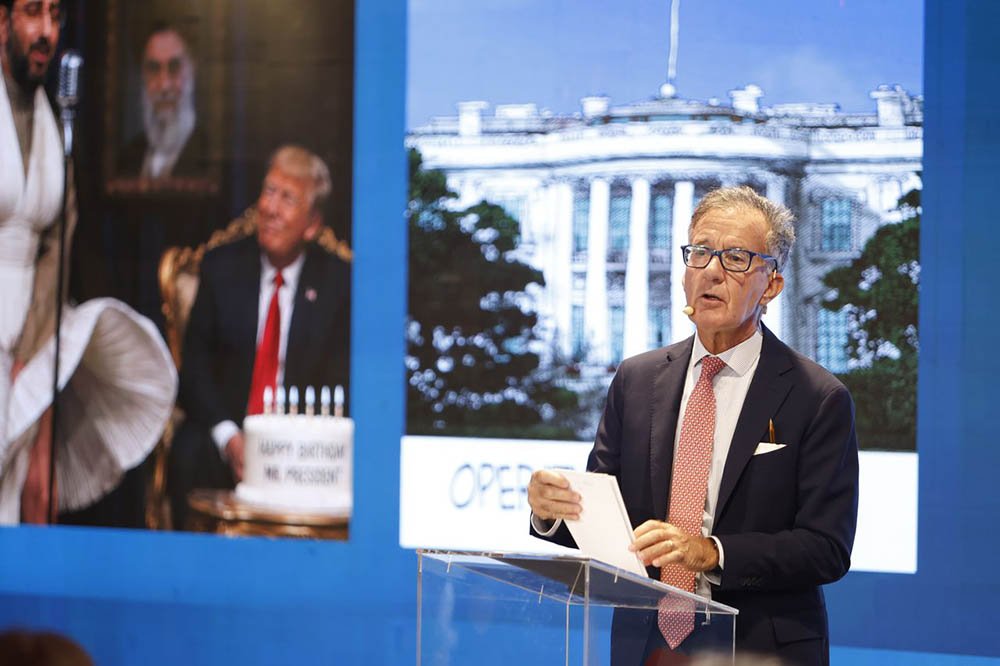
DUTIES "The tariffs introduced by the Trump administration have had a manageable impact for us. The data shows it: in 2025 ," stated Riccardo Rosa, " sales in the United States are expected to drop by 9%. But the US remains, by far, the primary market for Made in Italy products in this sector. This is possible for several reasons: first, the United States does not have sufficient local production to cover domestic consumption and requires advanced, highly customized technology; furthermore, at this particular moment in history, the defense sector, a strategic sector for the country and therefore exempt from paying duties, is experiencing fairly buoyant demand. These three factors have allowed, and continue to allow, Italian manufacturers to continue operating in the American market, which has always appreciated the characteristics of our offering."
"This doesn't mean ," the president added, " that the critical issues have been eliminated. For the types of machinery also produced by American manufacturers, the tariff is clearly a heavy burden that has limited sales of Made in Italy products in this sector. But that's not all. Trump's trade policy has had some significant indirect effects; for example, the increased cost of some raw materials applied by other countries in response to the tariffs, an increase that also impacts our business."
EUROPE AND THE AUTOMOTIVE INDUSTRY "Managing the impact of wars and the weakness of a key market like Europe has proven more complicated. In the case of wars, the most obvious example for us manufacturers is the disappearance of Russia from our radar. In 2013, before the invasion of Crimea and the first sanctions, it was our fourth-largest export market, with €177 million in exports. In 2022, it was our eighth-largest destination market (with €99 million). Since 2023, it has been absent and, more importantly, it is a market we have given away to Chinese manufacturers. Who knows if, once this wound at the heart of Europe is healed, we will be able to recover at least some of the lost ground."
"And speaking of Europe ," stated Riccardo Rosa, " we are dangerously approaching the risk of deindustrialization. The absolutely questionable decisions made by EU authorities regarding the electric automotive transition are increasingly showing their concrete effects. At a time when the younger generations' concept of transportation is profoundly changing, with the car no longer considered a status symbol but a means of travel, European government bodies, with their dirigiste attitude, have effectively allowed Asian offerings to invade spaces previously reserved for our manufacturing sector. Before the effects become irreversible, we ask those who represent and govern us in Europe to rethink their approach, which must be based on the principle of technological neutrality, thus allowing the automotive supply chain, and its entire extensive supply chain, to properly manage the ongoing transition not only with respect for the environment but also, where possible, safeguarding the jobs of those employed in the industry."
"Aside from the car to which it is so closely tied, Germany, the sick man of Europe, may be seeing the light at the end of the tunnel. In the first quarter of 2026, the machine tool orders index, compiled by the German association, rose 15.1%, breaking a negative trend that had lasted three consecutive years. The recovery plan promoted by Chancellor Mertz and the defense support plan are restoring confidence in the country. Let's hope this is indeed the case, because if the German locomotive restarts, we, the first carriage of this train, are ready to hook up to it and continue working in the Made in Germany production chains, which travel along very long routes, distributing our production everywhere in the world."
THE HORMUZ CRISIS "While we await the terms of the agreement and are aware that it will take time for freight transit to resume its normal pace, the impact on our business is currently manageable, and we are confident that the easing of tensions in the Middle East will bring significant benefits to our companies. In terms of direct business, the region accounts for approximately 30% of exports to Asia, so a return to "normalcy" will boost our business in the region, where metal forming technologies are in particular in demand in response to major infrastructure development plans. Indirectly, the resumption of freight transit will allow for a gradual reduction in procurement costs, which have risen sharply in recent months."
THE ITALIAN MARKET AND INCENTIVES "In a crucial moment like the one we are experiencing, with decidedly weak foreign demand, the domestic market becomes even more important for our companies. The availability of the Hyper-Depreciation measure provided for by the new Transition Plan 5.0, now fully operational, is an excellent tool to support Italian demand for new machine tools."
We must say that 2026 had started off on a really challenging note: domestic order intake had dropped significantly, 29% compared to the January-March 2025 period. However, the feeling was that demand had stalled. In this first month of Hyper-Depreciation, with the GSE Platform now operational, we've already seen a shift in attitude among our Italian customers. This confirms what we've been saying for some time: Italian demand is there, but customers were waiting for clarity before they could place their orders.
The incentive is now working. On the sidelines of the Mechanics Roundtable convened by the Ministry of Business and Made in Italy at the end of June, it emerged that 90% of the total resource reservation requests entered into the platform were for investments in machine tools. Good news! MIMIT deserves recognition for having developed, albeit belatedly, an easy-to-use, three-year measure. Finally, Italian companies have an industrial policy measure that allows for medium-term planning for both producers and investors. The hope is that its use will allow Italian demand to return to the high levels of 2021-2022, thus also ensuring the proper updating of our industry, which requires continuous innovation to remain competitive in the international market, where digital technology and AI are redrawing the rules of the game.
Ucimu: orders index for the second quarter of 2026 still down (-25.8%); foreign orders (-15.3%); dom
Riccardo Rosa, president of UCIMU: "We'll have to wait until the next few months to see the full effects of the hyper-depreciation, but we're very confident this measure will last until September 2028." In the second quarter of 2026, the machine tool orders index compiled by the UCIMU-SISTEMI PER PRODURRE Study & Business Culture Centre recorded a decline of -25.8% compared to the April-June 2025 period . In absolute value, the index stood at 47.8 (base 100 in 2021). The result expresses the difficulties that Italian machine tool manufacturers have encountered both on the domestic and foreign markets. In particular, orders collected from abroad decreased by -15.3% compared to the second quarter of 2025, for an absolute value of 63.2. Order intake in Italy also declined , falling 38.7% compared to the same period of the previous year. The absolute value of the index stood at 33.1. Riccardo Rosa, president of UCIMU-SISTEMI PER PRODURRE, stated: “The uncertainty of the geopolitical context—shaken by wars, the Hormuz crisis, and the decidedly worrying attitude of the President of the United States toward international politics—has profoundly undermined the already precarious balance in which the industry found itself operating.” "The decline in international deliveries, given the current situation, is understandable, and we expected it. Business has slowed, but, as is our custom, we've tried to focus our offerings on those areas less directly affected by conflicts and critical issues, diversifying our product offerings wherever possible." "It is certain ," continued President Riccardo Rosa , " that the investment figures and values once ensured by the automotive industry cannot be replaced by the demand expressed by other sectors, however dynamic, such as defense, aerospace, and energy. For this reason, once again, we ask our representatives in Europe to reconsider their decision and adopt the principle of technological neutrality when defining automotive development plans. This approach would allow the industry, and its entire supply chain, to properly manage the ongoing transition, not only respecting the environment but also safeguarding, where possible, employment." Domestically, businesses awaited clarifications on the hyper-depreciation program to confirm their purchasing intentions. Since June 12th, the day all the operational steps were completed, the hyper-depreciation program has been bearing fruit. We immediately noticed a change in attitude among Italian users: orders are starting to arrive. "We'll have to wait a few more months, however, for the effect to be fully reflected in our data, but we're definitely confident. This is also because, in the meantime, we have data from the Ministry of Business and Made in Italy, which, as of July 9th, reported the submission of 7,000 communications on the GSE platform, worth €2.5 billion." MIMIT deserves great credit for having established a multi-year term for this incentive. Its effectiveness until September 2028 should ensure thoughtful planning of investments in new machine tools and production technologies by Italian customers, also allowing us manufacturers to plan our production activities over the medium term. "The hope ," concluded Riccardo Rosa , " is to soon see the Italian market return to the levels it experienced in 2021-2022, when it was worth over €6 billion. This is also because our manufacturing industry needs to innovate to remain competitive in an international context where digital and AI are completely reshaping the rules of the game."
 Industriale.it certification